 Ali Asghar
 The best small space coffee machines prioritize a narrow vertical footprint without sacrificing brewing temperature. For maximum speed in a dorm or apartment, a single-serve pod machine or a slim compact espresso machine is ideal. If counter space is practically non-existent, non-electric manual brewers like a French press, pour-over cone, or stovetop Moka pot can be stored completely away in a cabinet after use, making them the ultimate space-savers for a small kitchen.
Introduction
Downsizing your living space should never mean downsizing the quality of your morning brew. Whether you are setting up a cramped college dorm, moving into a cozy urban apartment, or trying to clear clutter from a small kitchen, finding the best small space coffee machines requires balancing two competing priorities: physical dimensions and extraction performance.
The modern market is filled with options ranging from high-tech, ultra-narrow electric brewers to time-tested manual tools that require no electricity at all. However, navigating these product choices can quickly become overwhelming when every brand claims to have the most compact design. This comprehensive, data-driven guide cuts through the marketing noise to help you make a smarter buying decision. We break down the engineering, footprints, and flavor profiles of every major compact brewing category so you can find the perfect fit for your home.
If you are still weighing your options and want to see how these compact setups stack up against larger, premium setups, make sure to read our comprehensive Best Espresso Machines for Home guide before making your final decision.
Why Footprint Matters: Reclaiming Counter Real Estate
In a micro-apartment or shared kitchen, countertop real estate is a premium commodity. Every square inch allocated to an appliance is space taken away from food preparation, cooking, or general utility. This spatial reality has driven an explosion of innovation within the small space coffee segment. Manufacturers are no longer just shrinking their standard machines; they are completely re-engineering internal heating blocks, water lines, and bean hoppers to fit ultra-slim profiles.
Beyond structural constraints, your lifestyle plays a huge role in choosing a setup. A compact coffee station tucked into a home office desk, a studio apartment corner, or a tight kitchen alcove saves you time and morning friction.
Crucially, modern compact machines have closed the quality gap. You no longer have to settle for lukewarm, under-extracted drip coffee just because your machine is thin. Today’s compact brewers are engineered to deliver precise control over brewing temperature, water volume, and extraction dynamics, allowing you to enjoy café-quality beverages regardless of your home’s total square footage.
The Core Categories of Compact Coffee Makers
Choosing the right type of compact brewer depends entirely on your daily routine, flavor preferences, and how much physical space you can permanently dedicate to a countertop appliance.
Single-Serve Pod and Capsule Machines
Single-serve pod machines are a go-to choice for fast-paced living environments like a student dorm or a busy office. These systems are explicitly built to brew one cup at a time, completely removing the need for a large glass carafe or a bulky internal basket.
- The Footprint: Most single-serve machines feature an incredibly narrow width, often measuring less than 5 inches across. This allows them to slide easily into narrow gaps between your refrigerator and kitchen wall.
- The Technology: Budget options are widely available at major retail outlets like Walmart and Amazon, while higher-tier models focus heavily on advanced temperature control and programmable brewing cycles. to prevent the bitter or sour notes common in older pod models.
- The Verdict: If your absolute top priority is a simple, one-button interface that requires zero cleanup on busy mornings, a single-serve pod machine is tough to beat.
Compact Espresso Machines for Limited Spaces
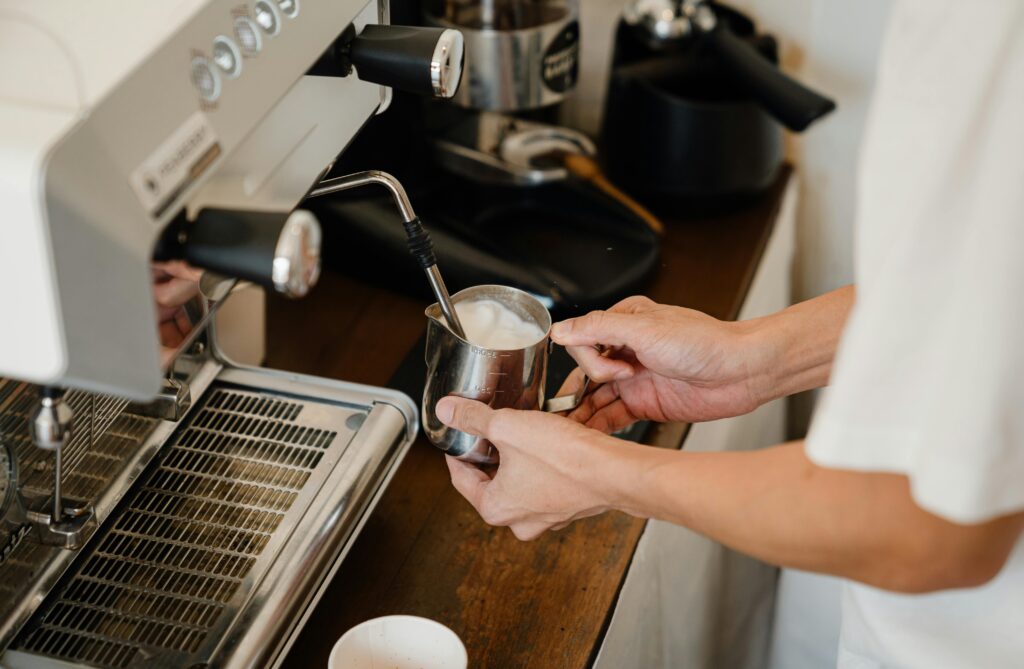
For a long time, enjoying authentic espresso at home required dedicating a massive workspace to a commercial-sized machine. Thankfully, modern engineering has brought forth the compact espresso machine a scaled-down appliance that packs powerful internal heating elements into a remarkably small frame.
COMPACT ESPRESSO ENGINE LAYOUT
[Slim Water Tank] –> [Thermoblock Heater] –> [15-Bar] Pump
[Rich Espresso Shot] –> [51mm Portafilter]
- The Extraction Mechanics: High-quality compact espresso makers utilize space-saving thermoblock heating systems instead of large internal copper boilers. These thermoblocks heat water on demand within seconds, delivering the precise, stable brewing temperatures and high pump pressures needed to produce genuine crema.
- Smart Integration: Many of these modern, slim machines feature intuitive interfaces, automatic volumetric shot trimming, and built-in steam wands for texturing milk. They provide an excellent way to replicate a premium espresso bar experience in an apartment kitchen without sacrificing an inch of functional prep space.
The Classic French Press: Zero-Footprint Storage
If you want to keep your countertops completely clear when you aren’t actively brewing, manual immersion tools like the French press are an unmatched option.
- The Storage Advantage: Because it relies entirely on external hot water and manual plunger mechanics, a French press contains no electrical parts, power cords, or heavy pumps. When your brew is finished, it can be washed and stored entirely inside a kitchen cabinet or on a shelf.
- Flavor Profile: The French press uses a metal mesh filter that allows the natural oils and fine particles of the coffee bean to pass directly into your mug. This results in a heavy-bodied, deeply aromatic, and robust cup of coffee. As a bonus, most French press units are fully dishwasher-safe, resolving maintenance issues in spaces where deep sinks aren’t available.
Pour-Over Drippers: Minimalist Precision
Pour-over coffee drippers use a cone-shaped geometry to guide hand-poured hot water through a bed of ground coffee at a controlled pace. This method is incredibly popular among specialty coffee purists who want to highlight unique origin flavors.
- Unmatched Spatial Efficiency: A pour-over cone sits directly on top of your favorite morning mug or a tiny serving carafe. It takes up virtually zero space on your counter and can be hung from a kitchen hook or tucked into a shallow drawer.
- Brewing Control: This method gives you absolute authority over your pouring speed, water temperature, and pre-infusion timing. If you value pristine flavor clarity and enjoy a mindful, hands-on morning routine, a ceramic, plastic, or metal pour-over cone offers exceptional performance for a very low cost.
Stovetop Moka Pots: High-Strength Stovetop Brewing
Originating in Italy, the Moka pot is a classic stovetop brewer that uses steam pressure to force boiling water upward through a basket of finely ground coffee.
- The Countertop Alternative: Much like the French press, a Moka pot completely frees up your counter space because it lives on your stove during extraction and sits away in a cupboard afterward. It requires no complex electronics or delicate computer displays—just a basic heat source.
- Espresso-Adjacent Strength: While it doesn’t reach the full 9 to 15 bars of pressure generated by an electric compact espresso machine, a Moka pot produces a concentrated, intense, and syrupy brew that serves as a fantastic base for lattes, cappuccinos, or Americanos. They are remarkably durable, highly affordable, and readily accessible on online platforms like Amazon.
Crucial Features to Evaluate Before Buying
To find the right machine for a tight space, you need a clear framework for comparing different designs. Keep these key considerations in mind:
Physical Dimensions and Cabinet Clearance
Never guess the size of an appliance based on online photos alone. Before browsing listings on Amazon or shopping at Walmart stores, use a physical tape measure to check your designated coffee station area.
Critical Checklist:
Width: Ensure you have clearance for adjacent appliances or prep work.
Depth: Check that the machine won’t hang over the front edge of your countertop.
Height with Lid Open: Many single-serve and drip machines require you to lift a top lid to insert pods or grounds. Make sure the machine can fully open beneath your upper kitchen cabinets without hitting them.
Brewing Temperature Consistency
The temperature of your brewing water is a fundamental pillar of proper extraction. To extract balanced flavors without sourness or bitterness, your machine must consistently deliver water between 195°F and 205°F directly to the coffee grounds. Cheaper, poorly engineered compact machines often use low-grade thermostats that fail to reach this critical window, leaving you with flat, lukewarm coffee. Look for compact options that explicitly highlight built-in PID controllers or high-performance thermoblock heaters.
Water Reservoir Design and Accessibility
In a cramped kitchen corner, refilling a water tank can quickly become a frustrating daily chore.
- Front-Loading vs. Rear-Loading: If a machine features a water reservoir that removes straight out of the back, you will be forced to slide the entire machine out from under your cabinets every time it runs empty. For tight alcoves, look for front-loading reservoirs or wide, top-filling ports.
- Capacity Trade-Offs: A tiny reservoir minimizes the machine’s overall physical size but will require constant refilling. Balance your personal daily cup consumption against the physical footprint of the tank to find your sweet spot.
Price, Value, and Retail Availability
The market covers a massive pricing spectrum. Manual brewers like Moka pots and pour-over drippers offer excellent value and elite durability for minimal cost. On the regular appliance side, single-serve pod systems provide accessible automation at competitive prices, while premium, high-pressure compact espresso makers sit at a higher tier due to their intricate internal pumps and professional metal casings.
Comprehensive Small Space Coffee Machine Comparison
| Brewing Method | Best Suited For | Advantage | Price Link |
| Single-Serve Pod | Busy students, dorms, office desks | Fast, one-touch execution | Check Price on Amazon |
| Compact Espresso | Espresso purists, latte lovers | Authentic café performance | Check Price on Amazon |
| French Press | Heavy-body flavor lovers | Stores away completely | Check Price on Amazon |
| Pour-Over Dripper | Flavor purists, single-origins | Exceptional flavor clarity | Check Price on Amazon |
| Stovetop Moka Pot | Strong coffee lovers, small kitchens | Indestructible metal build | Check Price on Amazon |
Step-by-Step Guide to Optimizing a Tiny Coffee Station
Setting up an efficient coffee routine in a limited area requires smart spatial organization. Follow this workflow to get the most out of your compact setup:
Step 1: Vertical Evaluation (Measure width, depth, and upper cabinet clearance)
  │
  ▼
Step 2: Base Selection (Choose a slim machine or a storable manual brewer)
  │
  ▼
Step 3: Accessory Consolidation (Use a single multi-use mug; store beans away)
  │
  ▼
Step 4: Active Brewing (Keep pathways clear; utilize a front-filling water tank)
  │
  ▼
Step 5: Post-Brew Routine (Clean immediately to keep minimal counter space spotless)
- Assess Your Spatial Volume: Measure your available surface area and vertical clearance. Ensure an electrical outlet is safely within reach without stretching cords across your cooking zones.
- Select a Dedicated Base: Place your compact brewer on a non-slip, water-resistant mat. If using a countertop machine, position it so you can easily access the water reservoir and power switch.
- Consolidate Accessories: Avoid cluttering your limited workspace with multiple glasses and stirring spoons. Choose one high-quality travel tumbler or standard mug, and keep your coffee beans stored neatly inside a nearby pantry cabinet.
- Execute an Efficient Extraction: Keep your immediate workspace clear while brewing. For manual methods, heat your water using a compact, gooseneck electric kettle or a basic stovetop unit.
- Clean the Station Immediately: In a small home, a dirty coffee maker instantly makes the entire kitchen look cluttered. Wipe down any stray splashes, empty your spent pods or grounds right away, and put away your manual components to keep your surfaces pristine.
Expert Tips for Small Space Brewing
- Utilize Wall Space: If your counter is completely full, mount a sturdy floating shelf above your coffee station to hold your favorite mugs, coffee canisters, or manual drippers.
- Invest in a Drawer Organizer Base: For single-serve capsule setups, buy a slim pod-holder drawer designed to sit directly underneath the machine’s base. This lets your machine rest on top of its own pod storage, completely saving a drawer’s worth of space.
- Go Cordless Where Possible: If you are brewing in a temporary space like a college dorm or a studio apartment corner, manual grinders and non-electric manual brewers keep your electrical outlets free for other essential appliances.
- Opt for Multi-Functional Gear: Choose a compact machine featuring a built-in hot water dispenser or steam wand. This eliminates the need to own a separate kettle for making tea or heating milk.
Common Mistakes to Avoid
- Ignoring Vertical Clearance: Many buyers find a machine with an incredibly thin width, only to realize they cannot lift the top pod-loading flap because it strikes the underside of their low kitchen cabinets. Always check the machine’s full height dimensions when open.
- Leaving Water in the Tank: In tight, enclosed kitchen corners or darker alcoves, stale water left sitting inside a small reservoir can rapidly encourage mold and bacterial growth. Make a habit of emptying, rinsing, and drying your water tank regularly.
- Overcomplicating the Interface: Buying a machine with complex programming menus and extensive touchscreen options can backfire in a fast-paced environment. If you want a quick, seamless morning routine, stick to straightforward, tactile buttons.
- Forgetting General Upkeep: Scale buildup from hard tap water chokes narrow internal water lines, lowering extraction temperatures and causing premature part failure. Implementing routine maintenance tips—like descaling with a food-safe solution once a month—preserves your machine’s performance and significantly extends its operational lifespan.
Our Evaluation Methodology
To create a truly helpful guide for consumers navigating compact living spaces, we analyze the entire market using strict, practical criteria. We don’t just look at manufacturer spec sheets; we evaluate how these machines perform in real-world scenarios.
Our scoring framework rates products on physical width-to-depth ratios, the consistency of their internal heating blocks, and how easy they are to clean in a single basin sink. We cross-reference our internal testing data with verified long-term consumer feedback across a wide range of kitchen layouts, ensuring our recommendations are robust, unbiased, and highly dependable.
Conclusion and Final Verdict
Finding the ideal small space coffee maker comes down to identifying your personal daily priorities. If you are rushing out the door on a tight schedule, an ultra-slim single-serve pod machine provides unmatched speed and convenience. For those who want café-quality milk texturing and authentic crema without giving up precious counter space, a specialized compact espresso machine is an exceptional investment.
Meanwhile, if you prefer a clean kitchen aesthetic, manual tools like the French press, pour-over cone, or stovetop Moka pot can be tucked away out of sight, proving you don’t need a massive kitchen to enjoy a world-class cup of coffee.
Here is a structured, SEO-optimized Frequently Asked Questions (FAQ) section designed specifically to match the needs of your Small Space Coffee Machines article on littlecupexperts.com.
These answers are tailored to be direct, helpful, and concise so they can easily win Google’s Featured Snippets.
Frequently Asked Questions (FAQ)
What is the best simple drip coffee maker?
The best simple drip coffee maker for most households is the Moccamaster KBGV Select (or the Bonavita Connoisseur for a budget-friendly option). Both feature simple one-touch operation but are engineered to heat water to the exact SCA-approved temperature window (92°C to 96°C) for perfect extraction without complicated settings.
What is the smallest drip coffee maker?
The smallest traditional electric drip coffee maker is the Black+Decker 5-Cup Coffeemaker or the Capresso 5-Cup Mini. If you want an ultra-compact setup that takes up virtually zero counter space, a non-electric manual option like the Hario V60 or a single-serve AeroPress is technically the smallest and most space-efficient way to brew.
What is the best small coffee machine for home use?
The Breville Bambino wins for small-space espresso lovers due to its narrow 15 cm width, while the Keurig K-Slim or Nespresso Vertuo Pop are the best small pod machines for pure convenience. For classic drip coffee in a tight kitchen, the Zojirushi 5-Cup Zutto offers a highly compact, sleek design perfect for home counters.
Which coffee dripper is best?
The Hario V60 is widely considered the best manual coffee dripper for highlighting clean, bright, and floral notes in light-to-medium roasts. However, if you want a more forgiving, easier-to-brew option that ensures an even extraction without a complex pouring technique, the flat-bottom Kalita Wave is the best choice.
Which is the best coffee maker for home use?
There is no single “best” machine for everyone, as it depends entirely on your lifestyle:
- For Speed & Simplicity: A premium pod machine or a programmable drip brewer.
- For Flavor Quality: A manual pour-over dripper or an SCA-certified batch brewer.
- For Café-Style Drinks: A compact semi-automatic espresso machine.
Is there really a difference in drip coffee makers?
Yes, there is a massive difference. Cheap, standard drip coffee makers usually fail to reach the proper brewing temperature (often staying below 90°C), resulting in sour, under-extracted coffee. Premium or SCA-certified drip makers use powerful copper heating elements to hold a stable temperature, mimic a manual pour-over bloom phase, and shower the coffee bed evenly for a far superior taste.