
 Ali Asghar
 The Breville Bambino vs Bambino Plus debate is one of the most common questions in the home espresso world and for good reason. The Breville Bambino and Bambino Plus pull identical espresso same ThermoJet heating, same 9-bar extraction, same 54mm portafilter. The only real difference is the steam wand: the Bambino’s manual wand rewards practiced technique at a lower price (~$299.95), while the Bambino Plus (~$499.95) automates milk texturing with preset temperature and froth buttons. Choose the Bambino for espresso-focused drinkers on a budget; choose the Plus for households that want consistent lattes with zero learning curve.
If you’re comparing all the top models, read our complete Best Espresso Machines for Home guide.
Breville Bambino vs Bambino Plus Quick Comparison Table
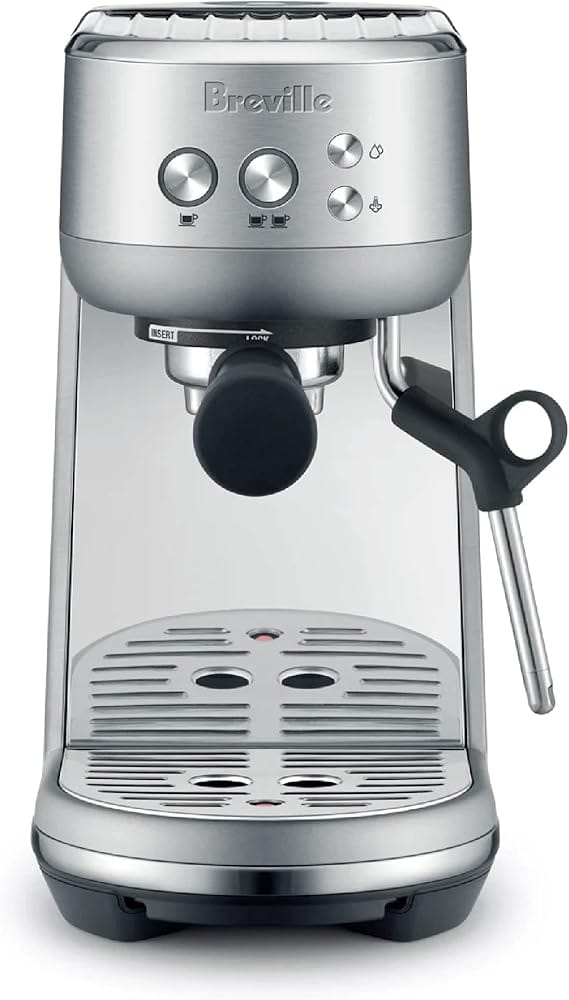
Compact design
Great espresso quality
Less convenient for milk drinks
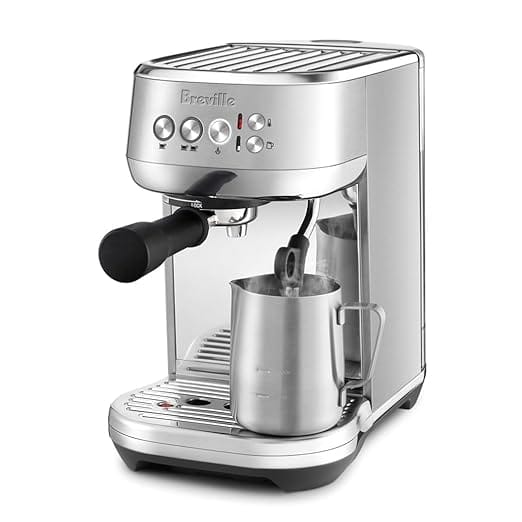
Auto purge function
Easier workflow
Consistent milk froth
Slightly larger footprint
Where These Machines Sit in Breville’s Range
Breville (sold as Sage in the UK and EU) positions the Bambino series as its entry-level tier for genuinely café-quality espresso, without the bulk or cost of flagships like the Barista Express or Oracle. The Bambino (model BES450) and the Bambino Plus (model BES500) exist to give buyers a choice between manual skill-building and automated convenience, at two distinct price points. Anyone comparing the Breville Bambino vs Bambino Plus is usually really asking one question: is automatic milk steaming worth roughly $200 more?
Both machines sit below the Barista Express, which adds an integrated grinder, and well above the capsule-machine market. They’re the smallest meaningful entry point into real, ground-coffee espresso which is exactly why they’ve become bestsellers in their category.
Breville Bambino BES450 vs Bambino Plus BES500: Key Differences
| Feature / Spec | Breville Bambino (BES450) | Breville Bambino Plus (BES500) |
| Model Number | BES450 | BES500 |
| Price (approx. 2025) | ~$299–$329 | ~$399–$499 |
| Heating System | ThermoJet® (3-sec heat-up) | ThermoJet® (3-sec heat-up) |
| Pump Pressure | 9 bar (15-bar pump) | 9 bar (15-bar pump) |
| Dimensions (WxHxD) | 6.3 × 12.3 × 13.3 in | 7.5 × 12.3 × 14.5 in |
| Water Tank | 1.4 L (47 fl oz) | 1.9 L (64 fl oz) |
| Steam Wand | Manual (ball-joint) | Auto + Manual (pivot-joint) |
| Milk Temp Control | Manual technique | Low / Med / High preset |
| Milk Texture Control | Manual technique | Low / Med / High preset |
| Auto Purge | No | Yes (after steaming) |
| Color Options | Brushed stainless only | 9+ colors available |
| Portafilter Size | 54 mm | 54 mm |
| Accessories Included | Basic tamp, filter baskets | Razor tool, backflush disc & tabs, premium tamp |
| Drip Tray Depth | Deeper (sturdier) | Shallower (easier to spill) |
| Warranty | 1 year | 2 years |
The Steam Wand: The Defining Difference
If one feature separates the Bambino from the Bambino Plus, it’s the steam wand and understanding this difference is the key to making the right purchase decision.
Breville Bambino — Manual Steam Wand
The Bambino uses a traditional single-hole ball-jointed steam wand that you control entirely by hand. You position the wand, submerge the tip, open the steam valve, and use technique angle, depth, wrist movement to introduce air and create microfoam. This is exactly how baristas learn steaming in professional training environments, which is part of why so many enthusiasts recommend starting here.
The upside: manual steaming produces the highest-quality microfoam once you’ve built the skill. Experienced users consistently report that the Bambino’s manual wand, handled properly, rivals or exceeds the texture produced by the automated system on the Plus. The wand also takes milk from cold to steamed in roughly 50 seconds slightly slower than the Plus, but perfectly workable for home use.
The downside: there’s a learning curve. Beginners often produce large bubbles (macrofoam) rather than the silky microfoam needed for latte art and cappuccino texture. Expect roughly 1–3 weeks of regular practice before results become consistent and expect a few oversteamed or “screechy” pitchers along the way. That’s normal, not a sign you’re doing it wrong.
Breville Bambino Plus — Automatic Steam Wand
The Bambino Plus replaces manual skill with engineering. Its four-hole steam wand connects to an integrated temperature sensor that sits in the milk jug. You select your temperature (low / medium / high) and texture (low / medium / high) using two dedicated buttons, submerge the wand and sensor together, press steam — and the machine does the rest, automatically stopping when it hits the target temperature.
The result: consistently acceptable microfoam on every attempt, starting with your very first drink. For households where multiple people use the machine, or where you just want a reliable flat white before work without dialing in technique, this automation is genuinely valuable.
The trade-off: the pivot-joint wand is less ergonomically flexible than the Bambino’s ball joint, so it’s harder to work at an angle if you ever want to steam manually instead. The sensor adds a component to clean daily. And the automation, while consistent, produces a result that many experienced baristas consider slightly less refined than well-executed manual steaming reliable, but rarely the absolute best foam you could get by hand. The Plus also auto-purges the wand after steaming, which is convenient for hygiene but fills the shallower drip tray faster than the Bambino’s.
Espresso Quality: Are They Actually Different?
Here’s the good news for buyers: both machines pull virtually identical espresso shots. The brewing hardware is the same ThermoJet® heating to stable brew temperature in about 3 seconds, 9-bar extraction pressure via a 15-bar pump regulated down to 9 bar for optimal extraction, a 54mm portafilter with single and double baskets, and a pre-infusion stage that gently saturates the puck before full pressure is applied.
Both machines also use PID temperature control, meaning brew water temperature stays consistent throughout the extraction window a critical factor for shot repeatability. The main hardware difference on the brew side is that the Bambino Plus adds a 3-way solenoid valve, which reduces puck stickiness and portafilter “sneeze” on removal; the Bambino skips this component, so pucks come out slightly wetter. In side-by-side tastings, espresso from the Bambino and Bambino Plus is effectively indistinguishable when brewed with the same beans, grind, and dose.
Verdict: the espresso itself is a draw. Your choice between models is entirely about the milk steaming experience and secondary factors like size, color, and accessories not shot quality.
Design, Size & Footprint
Both machines are among the most compact semi-automatic espresso machines on the market a major selling point for apartment dwellers, small kitchens, and office installations.
Breville Bambino Dimensions
- Width: 6.3 inches — notably slim, saves meaningful counter space
- Height: 12.3 inches — fits under most cabinets
- Depth: 13.3 inches
- Water tank: 1.4 L — adequate for 10–12 double espressos before refilling
- Available in: brushed stainless steel only
- Drip tray: deeper and sturdier — lower spillage risk
Breville Bambino Plus Dimensions
- Width: 7.5 inches — roughly 1.2 inches wider due to the larger tank and sensor housing
- Height: 12.3 inches — same as the Bambino
- Depth: 14.5 inches — slightly deeper
- Water tank: 1.9 L — about 35% larger, useful for higher-volume households
- Available in: 9+ colors including Black Truffle, Damson Blue, Sea Salt, and Smoked Hickory
- Drip tray: shallower — auto-purge fills it faster, so it needs emptying more often
If counter space is at a premium, the Bambino’s narrower profile is a genuine advantage. If you want a machine that makes a visual statement in a contemporary kitchen, the Bambino Plus’s color range is hard to beat and, in a quirk worth knowing before you buy, third-party retailers often mark up the non-stainless colorways more than Breville does directly.
Accessories: What’s in the Box?
The Bambino Plus justifies some of its price premium through a more complete accessory bundle:
Breville Bambino
- Single and double wall filter baskets
- 54mm plastic tamper (basic quality)
- Milk jug (basic, 480ml)
- Cleaning disc and tablet
Breville Bambino Plus
- Single and double wall filter baskets
- 54mm stainless steel tamper (noticeably higher quality)
- Razor dose-trimming tool for a level, consistent puck every time
- Backflushing disc and cleaning tablets — important for machine longevity
- Temperature sensor jug for automatic steaming
- Milk jug (480ml)
The Razor tool alone is worth noting it ensures a perfectly level coffee puck, which directly impacts extraction evenness and shot quality. Bambino owners who want this precision can buy a Razor or a proper tamping mat separately for under $20, which closes most of this particular gap cheaply.
Price Analysis: Is the Bambino Plus Worth the Premium?
At the time of writing (2026), the Breville Bambino retails for around $299.95, while the Bambino Plus sits at approximately $499.95 at MSRP though it’s frequently discounted into the $399–$449 range depending on retailer, color, and season. That’s typically a $100–$200 price difference depending on where and when you buy.
The question is whether that premium is justified. Consider what the Plus actually delivers for the extra money:
- Automatic milk steaming eliminates the learning curve for milk drinks
- 9+ color options — genuine aesthetic value for a visible kitchen appliance
- Larger water tank (0.5L more) — fewer refills in multi-person households
- Superior accessory bundle — the Razor tool and stainless tamper have real-world value
- 2-year warranty vs. 1-year — meaningful peace of mind on a daily-use appliance
- 3-way solenoid valve — cleaner puck removal, less mess at the portafilter
Our take: for buyers who primarily drink milk-based drinks lattes, flat whites, cappuccinos the Bambino Plus is worth the premium. For buyers who plan to drink mostly black espresso, or who are genuinely willing to spend a few weeks learning manual steaming, the Bambino offers exceptional value and virtually identical espresso quality at a meaningfully lower price.
Total Cost of Ownership (Beyond the Sticker Price)
The upfront price gap between these two machines is only part of the real cost comparison. A few recurring expenses apply equally to both, and a couple apply more to one than the other.
- Descaling solution: Roughly $10–$15 every 2–3 months on both machines, more often in hard-water areas. Neither model has an advantage here.
- Water filters: If you run filtered water into either machine (recommended), budget $15–$25 every 2–3 months for replacement cartridges.
- Cleaning supplies: Backflush tablets and cleaning discs — the Bambino Plus ships with a backflushing disc and tabs included; Bambino owners typically need to buy a compatible disc separately for about $15–$20 if they want to backflush regularly, which is worth doing even though the Bambino doesn’t strictly require it.
- Accessory catch-up: Bambino owners who want the Plus’s Razor tool and stainless tamper can add both for roughly $35–$45, narrowing the effective price gap between the two models if you want feature parity.
- Warranty-driven repairs: The Plus’s 2-year warranty versus the Bambino’s 1-year becomes financially relevant if a heating element or pump issue surfaces in year two a scenario that isn’t common, but isn’t rare either, on daily-use compact espresso machines.
Once you account for matching accessories and the extra year of coverage, the real-world gap between a fully equipped Bambino and a stock Bambino Plus narrows to somewhere closer to $100–$150 rather than the full sticker difference worth knowing if you’re trying to decide whether the Plus’s automation is worth paying for outright, or whether you’re better off buying the Bambino and upgrading piece by piece.
Maintenance & Longevity
Both machines are built on the same core hardware, so their long-term reliability profile is similar but the maintenance routine differs slightly because of the automated milk system on the Plus.
What Both Machines Need
- Descale every 2–3 months (more often with hard water) to protect the ThermoJet heating element from scale buildup, which is the most common cause of slow heat-up times and eventual pump strain.
- Backflush weekly if you drink milk-based drinks daily, to clear oils from the group head and shower screen.
- Wipe the steam wand immediately after every use dried milk is far harder to remove than fresh milk, and buildup inside the tip restricts steam flow over time.
- Rinse and dry the drip tray daily to prevent mold growth in the crumb tray beneath it.
What’s Different on the Plus
The temperature sensor that sits inside the milk jug needs a quick wipe after every session dried milk on the sensor can cause inaccurate readings, which shows up as inconsistent steaming results over time. The auto-purge function is a net positive for hygiene since it clears the wand automatically, but because it also means more liquid goes into the shallower drip tray, Plus owners empty it more frequently than Bambino owners empty theirs.
Neither machine requires professional servicing under normal home use both are designed for owner-level descaling and cleaning, with Breville’s authorized service network available for anything beyond that during the warranty period.
Who Should Buy Each Machine?
Choose the Breville Bambino If You…
- Want excellent espresso at the lowest entry price
- Are comfortable learning (or already know) manual milk steaming
- Have very limited counter space and need the slimmest footprint
- Primarily drink black espresso, Americanos, or long blacks
- Enjoy the hands-on craft of barista technique
- Don’t need color options beyond brushed stainless steel
Choose the Breville Bambino Plus If You…
- Want consistently good milk-based drinks with minimal learning curve
- Live in a household where multiple people of varying skill will use the machine
- Value color-matching to your kitchen aesthetic
- Want a longer warranty and a more complete out-of-box accessory kit
- Drink flat whites, lattes, or cappuccinos daily and want reliable results every time
- Have the budget for the premium and see this as a long-term purchase
Step-by-Step: Getting a Great Shot From Either Machine
The brewing process is identical on both models the steps below apply whether you own the Bambino or the Plus.
- Dose 18–20g of freshly ground coffee into the double-wall basket using a scale, not a guess.
- Distribute and tamp level. An uneven puck causes channeling water finds the path of least resistance and blows through it, under-extracting the rest.
- Lock in the portafilter immediately after tamping so residual heat doesn’t affect the puck before extraction starts.
- Start the shot and let pre-infusion do its job this gentle initial saturation phase reduces channeling risk before full pressure kicks in.
- Target 25–30 seconds for a 36–40g double shot from an 18–20g dose. Faster means grind finer; slower means grind coarser.
- Steam your milk (manually on the Bambino, via preset on the Plus) while the shot is pulling, or immediately after, so both are ready together.
- Taste and adjust. Sour and thin means under-extracted grind finer or increase dose. Bitter and harsh means over-extracted grind coarser or shorten the shot.
Expert Tips
- Pair either machine with a quality burr grinder before upgrading anything else. A quality burr grinder has a bigger impact on shot quality than the difference between these two machines.
- On the Bambino, practice on cold water before wasting milk. The wand behaves the same in water as in milk for angle and depth practice save real milk for once your positioning is consistent.
- On the Bambino Plus, don’t ignore the “high” temperature preset for daily use. It’s calibrated for standard dairy; if you use oat or almond milk, start with “medium” since plant milks scald more easily.
- Purge the wand for one second before and after every steam even on the Bambino Plus’s auto-purge to clear condensation and prevent milk residue from baking onto the tip.
- Descale on schedule, not just when performance drops. Both machines are sensitive to scale buildup in the ThermoJet element; a monthly or bi-monthly descale (depending on water hardness) keeps heat-up times consistent.
Common Mistakes & Known Limitations
No machine is perfect. Here are the most frequently cited drawbacks for each, along with how to work around them.
Breville Bambino
- Manual steaming has a real learning curve for beginners budget 1–3 weeks of practice, not one session
- Only available in brushed stainless as of 2026
- 1-year warranty feels short for a premium-priced machine
- Basic accessory bundle — no Razor tool or quality tamper included
- No 3-way solenoid, so pucks come out slightly wetter and messier
Breville Bambino Plus
- Pivot-joint steam wand is less ergonomically flexible than the Bambino’s ball-joint design
- Auto-purge fills the shallow drip tray quickly — needs frequent emptying
- Temperature sensor in the milk jug adds a component to clean daily
- 54mm portafilter (not the industry-standard 58mm) limits aftermarket accessory options — true of both machines, but worth knowing if you plan to upgrade tampers or baskets later
- The highest automatic temperature preset can scorch milk if you’re not paying attention, particularly with plant-based alternatives
Final Verdict: Bambino vs Bambino Plus
The Breville Bambino and Bambino Plus are two of the best compact espresso machines available in 2026. Both deliver café-quality espresso that rivals machines costing two or three times as much. The choice between them is genuinely personal, not a question of quality versus compromise.
The Bambino rewards buyers who want to learn the craft and don’t need milk automation. Its narrower footprint, lower price, and identical espresso quality make it exceptional value.
The Bambino Plus rewards buyers who prioritize convenience, aesthetic choice, and consistent milk drinks from day one. The automation genuinely works, and the extended warranty and superior accessories justify the premium for most households.
Either machine, paired with a quality burr grinder and fresh beans, will produce espresso that outperforms the vast majority of what you’ll find at your local café. That’s the Bambino promise and both models deliver it.
What is the difference between Bambino and Bambino Plus?
The difference comes down to milk texturing automation, water tank size, and construction materials:
Milk Steaming: The standard Bambino requires manual milk texturing using a traditional steam wand. The Bambino Plus features an automatic, hands-free milk texturing system with temperature and froth level sensors built into the drip tray.
Water Tank: The Bambino Plus has a larger 1.9L (64 oz) water tank compared to the standard Bambino’s smaller 1.4L (47 oz) reservoir.
Build Quality & Accessories: The Plus model uses more premium stainless steel cladding and includes a heavier-duty 3-way solenoid valve that drys out the coffee puck after brewing (preventing a wet, soupy mess). It also ships with a nicer stainless steel milk jug and an updated tamper.
Is the Breville Bambino Plus worth it?
Yes, it is highly worth it for convenience-focused buyers. If you value saving time on busy mornings, the automatic milk frother allows you to press a button and walk away while it perfectly textures your milk. However, if you drink your espresso black or plan to master manual milk frothing yourself, the standard Bambino will save you money while delivering identical espresso shot quality.
Is the Bambino Plus better than the Barista Express?
It depends on your countertop space and grinder setup:
The Bambino Plus is better if: You want the incredibly fast 3-second ThermoJet warmup (the Express takes 30 seconds), automatic milk texturing, and a smaller kitchen footprint. It also leaves you free to pair it with a high-end standalone grinder that outperforms the built-in grinder on the Express.
The Barista Express is better if: You want an all-in-one workstation machine with a built-in grinder and love the look and feel of a physical, analog pressure gauge.
Which Breville model is best?
Best Budget Option: Breville Bambino (Excellent espresso quality for the lowest price).
Best Overall Mid-Range: Breville Barista Pro or Bambino Plus paired with a standalone grinder.
Best Premium Luxury: Breville Dual Boiler (for prosumer temp stability) or Breville Barista Touch Impress (for ultimate automated ease).
What is the lifespan of a Breville Bambino Plus?
The average lifespan is 3 to 5 years with normal consumer usage. However, many owners on enthusiast forums report their machines running perfectly for up to 8 years by strictly observing a routine of cleaning and using filtered/softened water to prevent catastrophic failures.
Is the Breville Bambino better than DeLonghi?
Yes, for traditional espresso lovers. In this price tier, the Bambino utilizes low-pressure pre-infusion and standard 9-bar extraction pressure parameters. This creates a much more authentic café-style extraction than competitive entry-level DeLonghi models (like the Dedica or Stilosa), which often rely on harsher, higher-pressure pumps and restricted pressurized baskets to force crema.
What are common problems with the Bambino?
Lightweight Frame: The machine is so light that it tends to slide across smooth countertops when you are locking the portafilter firmly into place.
Drip Tray Capacity: Because the machine automatically purges water into the drip tray after steaming to cool down the internal thermoblock, the tiny tray fills up and requires emptying constantly.
Sensor Glitches (Plus Model Only): Dried milk residue or water droplets on the bottom of the milk pitcher can occasionally trick the temperature sensor on the drip tray, causing it to overheat or underheat milk.
Is 3.5 bars enough for espresso?
No. Genuine espresso requires a minimum of 9 bars of atmospheric pressure to properly emulsify the natural oils in coffee grounds and produce authentic crema. Machines advertised at 3.5 bars are typically “moka-pot style” steam-driven machines. They brew strong, concentrated coffee, but lack the physical pump power needed to extract true espresso.
What are the common problems with Breville machines?
Scale Buildup Clogs: Because Breville machines use narrow heating elements (ThermoCoils and ThermoJets), they are highly sensitive to mineral scale buildup. Neglecting your descale alert light can completely block water flow or destroy the internal heater.
Clogged Steam Tips: Dried milk residue can quickly clog the fine output holes of the steam wand tip, leading to weak steam output or sputtering.
Plastic/Proprietary Components: Internal components use specialized plastic fittings and hoses that are notoriously difficult for consumers to source and repair at home compared to rugged commercial Italian machines.