
 Admin
Admin Introduction: Why a Daily Routine Makes All the Difference
Daily maintenance espresso machines are essential for great coffee. Learn the 4 best steps for morning startup and night cleaning routines.
There’s a reason serious coffee professionals talk so much about the daily routine. An espresso machine isn’t just an appliance — it’s a precision instrument that rewards consistent care and punishes neglect. For anyone who relies on their machine to produce a great cup every single morning, understanding and committing to proper daily maintenance routines is absolutely essential.
This guide walks through everything needed to keep an espresso machine in peak condition — from the morning startup routine to the final post-brew cleanup at night. Whether someone is running a busy café or simply brewing at home, following a solid daily cleaning checklist is the most reliable way to maintain coffee freshness, uphold hygiene standards, and extend the life of the machine.
The Case for Daily Maintenance: Freshness, Hygiene, and Flavor
Many espresso machine owners underestimate how quickly residue accumulates inside the machine after each use. Coffee oils, milk protein buildup, and mineral deposits don’t wait — they begin forming the moment brewing stops. Without regular attention, these deposits silently degrade both flavor and hygiene standards, often before the problem becomes visible.
Milk residue left inside a steam wand, for example, can harbor bacteria within hours. Old coffee oils trapped in the grouphead turn rancid and begin to taint every subsequent shot. The drip tray becomes a breeding ground for odor and bacterial growth if left unchecked. Maintaining a consistent daily routine isn’t optional — it’s the foundation of a well-functioning machine and a genuinely great brew.
Beyond flavor, there’s a straightforward hygiene argument. Any surface that contacts milk or brewed coffee needs to be cleaned after use, every single time. Sanitize the parts that matter, wipe down the surfaces that gather residue, and the machine stays safe, fresh, and reliable day after day.
Morning Startup Routine: Starting Strong
A great cup begins long before the first shot is pulled. A solid Daily Maintenance Espresso machines plan starts with a grouphead flush to clear stale water.
Step 1: Flush the Grouphead
The very first task each morning is to flush the grouphead with hot water. This purge clears out any stale water that has been sitting in the system overnight and brings the grouphead up to proper brewing temperature. A quick flush of five to ten seconds is usually sufficient. This single step has an outsized impact on shot consistency and is a cornerstone of every professional morning startup routine.
Step 2: Purge the Steam Wand
Before using the steam wand for the first time each morning, it should be purged with a short burst of steam. This purge steam wand step clears any condensation or residue from inside the tip and ensures the steam is dry and powerful right from the first use. It only takes a moment, but it makes a real difference in milk texture and hygiene standards.
Step 3: Check the Drip Tray
The drip tray collects overflow, rinse water, and spent espresso during operation. Before the morning rush begins, it’s worth checking whether the drip tray is empty and clean. An overfull drip tray can overflow unexpectedly and create unsanitary conditions beneath the machine. The habit of checking and emptying the drip tray every morning takes less than a minute and prevents a surprising number of mess-related headaches.
Step 4: Inspect the Portafilter
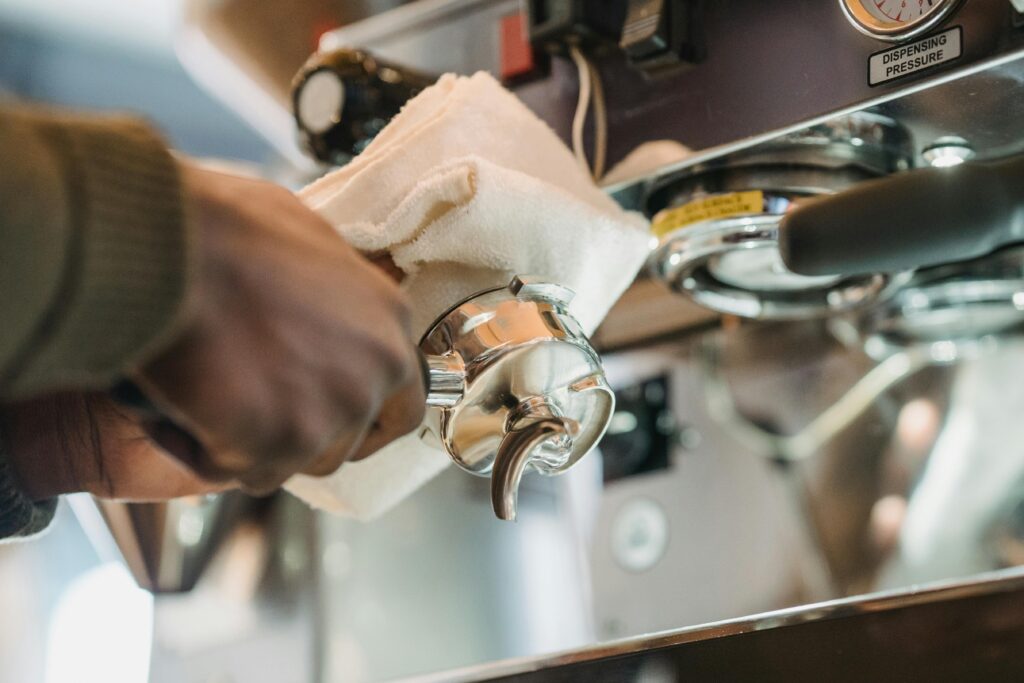
Give the portafilter a visual check every morning. Look for old puck remnants or coffee residue from the previous night’s use. Even after a thorough portafilter rinse, small amounts of dried coffee can accumulate in the basket or around the edges. A quick wipe with a microfiber cloth and a short portafilter rinse under hot water ensures the basket is ready for the first shot of the day.
After Each Use: The Habits That Protect Every Shot
Good espresso hygiene isn’t just about big cleaning sessions — it’s the small habits practiced after each use that make the real difference. These steps should become as automatic as pulling the shot itself.
Knock Box Disposal
After every extraction, the spent puck needs to be removed from the portafilter and deposited in the knock box. Proper knock box disposal keeps the workstation tidy and prevents old puck residue from drying inside the portafilter basket. The knock box should be emptied and rinsed regularly — ideally at least once during a busy session and again at night.
Portafilter Rinse
Immediately after knock box disposal, the portafilter should receive a thorough portafilter rinse under hot water. This removes the bulk of coffee oils and residue before they have a chance to dry and bond to the metal. The portafilter basket, in particular, collects fine grounds that can clog the holes over time if rinsing is skipped after use.
Group Head Brush
Using a group head brush after each use — or at minimum several times during a session — dislodges coffee grounds and oils that accumulate in the shower screen and grouphead gasket. This step is often overlooked in busy environments, but the group head brush is one of the most effective tools in the daily cleaning checklist. A few quick strokes after each extraction keep the grouphead clean and extend the time between deeper backflush sessions.
Wipe Down the Steam Wand
Every single time the steam wand is used for milk texturing, it must be wiped immediately after use. Milk protein buildup happens fast — within minutes, milk residue on the steam wand begins to cook onto the surface and becomes significantly harder to remove. The correct method is to purge steam wand with a short burst, then immediately wipe the wand with a damp microfiber cloth in one smooth motion. This two-step process — purge, then wipe — is the gold standard for steam tip cleaning and should never be skipped after use.
Steam Tip Cleaning
For thorough steam tip cleaning, the tip itself should be removed and soaked in warm water periodically throughout the day, particularly in high-volume environments. This loosens any milk protein buildup that has found its way into the small holes of the steam tip. A blocked steam tip reduces steam power and creates uneven milk texture — consistent steam tip cleaning keeps performance sharp and hygiene standards intact.
Midday Check-In: Staying on Top of Residue
In busier settings, a midday check-in helps prevent residue from accumulating to a level that requires more intensive cleaning at night. This doesn’t need to be a full cleaning session — a few targeted steps can keep everything fresh through the second half of the day.
- Empty the drip tray if it’s approaching capacity.
- Rinse the knock box to prevent odor from building up.
- Perform a quick backflush with water to clear coffee oils from the grouphead.
- Wipe down the exterior of the machine with a microfiber cloth to remove any splatter or coffee residue.
- Check the portafilter basket for any signs of blockage or caked-on residue.
The microfiber cloth is a barista’s best friend during midday maintenance. It cleans without scratching, absorbs moisture efficiently, and leaves surfaces with a clean polish that keeps the machine looking as professional as it performs.
Post-Brew Cleanup: The Night Routine
The night routine is the most thorough maintenance session of the day, and it’s where the real foundation of hygiene and machine longevity is built. Every major component that has been in contact with coffee or milk deserves attention before the machine is left overnight.
Backflush With Water
One of the most important steps in the night routine is to backflush with water. “Water backflushing is a key part of Daily Maintenance Espresso machines to remove trapped oils.” This process forces water back through the grouphead and shower screen, dislodging coffee oils and fine grounds that normal flushing misses. For machines equipped with a three-way solenoid valve, this is a highly effective daily maintenance step. A thorough backflush with water at the end of each day dramatically reduces the buildup that leads to off-flavors and slow deterioration of internal components.
Deep Steam Wand Clean
At the end of the night, the steam wand should receive more than a quick wipe. Remove the steam tip if possible and soak it in hot water to dissolve any remaining milk protein buildup. Use a small brush to clean inside the tip holes and ensure the wand itself is clean and free of residue. This deep clean, paired with a final purge steam wand step before shutdown, keeps the wand sanitary overnight and ready to perform well the next morning.
Empty and Sanitize the Drip Tray
The drip tray should be fully removed, emptied, and washed every night. Because it collects a mixture of water, milk, and coffee, it can quickly develop odor and bacteria if left unwashed. Rinse it thoroughly, wipe it clean with a microfiber cloth, and dry it before replacing it. In commercial settings, it’s worth choosing a food-safe sanitizing solution to fully sanitize the drip tray and the surrounding area where it sits.
Clean and Polish the Exterior
End the night by wiping down the entire exterior of the machine. A clean microfiber cloth wipe removes fingerprints, steam residue, and any coffee splatter that has accumulated during the day. For stainless steel machines, a dry microfiber cloth polish at the end of the night keeps the surface gleaming and prevents long-term discoloration from mineral deposits in water vapor.
Final Portafilter Storage
The portafilter should always be cleaned, dried, and stored loosely in the grouphead overnight — not locked in tightly. This helps maintain the grouphead gasket and ensures the portafilter is at the right temperature when the morning startup routine begins the next day.
Essential Daily Maintenance Espresso machines Checklist
For those who prefer a quick-reference format, here is a comprehensive daily cleaning checklist that covers every essential step from morning to night:
Morning Startup For Daily Maintenance Espresso machines
- Flush the grouphead with hot water.
- Purge steam wand to clear condensation.
- Empty drip tray and check for cleanliness.
- Rinse portafilter and inspect basket.
- Wipe exterior with microfiber cloth.
After Each Use
- Knock box disposal — remove and discard the spent puck.
- Portafilter rinse under hot running water.
- Group head brush to clear grounds and oils.
- Purge steam wand immediately after use.
- Wipe steam wand with microfiber cloth after purge.
Midday Check-In
- Empty drip tray if needed.
- Rinse knock box.
- Backflush with water to refresh grouphead.
- Microfiber cloth wipe of all exterior surfaces.
Post-Brew Cleanup — Night Routine
- Backflush with water (full cycle).
- Deep steam tip cleaning — remove, soak, brush the steam tip.
- Purge steam wand and wipe clean.
- Empty, wash, and sanitize the drip tray.
- Clean knock box thoroughly.
- Polish exterior with dry microfiber cloth.
- Store portafilter loosely in grouphead.
Understanding Hygiene Standards and Daily Maintenance Espresso Machines
It’s worth understanding why hygiene standards in espresso maintenance are taken so seriously by professionals. Coffee oils are organic compounds — they oxidize and turn rancid when exposed to air and heat. Milk is an even more sensitive substance: milk protein buildup left at room temperature begins to support bacterial growth within a matter of hours.
Bacteria thrive in warm, moist environments with a food source — and an uncleaned espresso machine, particularly around the steam wand and drip tray, provides exactly those conditions. Regular sanitizing of key components isn’t just about flavor; it’s a genuine public health consideration in commercial settings and a matter of responsible ownership at home.
The good news is that consistent daily maintenance routines eliminate this risk almost entirely. By cleaning after each use, performing a thorough post-brew cleanup every night, and following the daily cleaning checklist outlined above, bacteria never get the chance to establish a foothold.
Maintaining Coffee Freshness and Preventing Odor
One of the most noticeable benefits of a proper daily routine is the preservation of coffee freshness. Old coffee oils trapped in the grouphead or portafilter are the primary source of that stale, slightly bitter odor that plagues neglected machines. When these oils are cleared after each use and flushed out with a nightly backflush with water, every shot tastes cleaner and brighter.
Odor control extends to the knock box as well. Spent puck residue in a sealed knock box generates a surprisingly strong, unpleasant smell if left overnight. Emptying and rinsing the knock box as part of the post-brew cleanup at night makes a noticeable difference to the overall freshness of the workspace and the quality of the morning’s first brew.
The drip tray is another common source of odor. Because it collects a mix of liquids throughout the day, it needs to be emptied, cleaned, and dried daily. A clean, dry drip tray has no odor — a neglected one tells the whole story of missed routines.
Pro Tips for Staying Consistent
Knowing the routine is one thing — sticking to it every single day is another. Here are some practical strategies that experienced baristas use to stay consistent:
- Keep a microfiber cloth within arm’s reach of the machine at all times. The easier it is to wipe down after use, the more likely it becomes habit.
- Post a printed daily cleaning checklist near the machine as a reminder, especially in training environments or shared kitchens.
- Treat the purge steam wand step as a non-negotiable rule — no exceptions, even when the morning is rushed.
- Build the group head brush step into the workflow so it happens automatically after each puck disposal.
- Schedule the backflush with water step at the same time every night to turn it into a consistent closing ritual.
- Replace the microfiber cloth regularly — a saturated or dirty cloth spreads residue rather than removing it.
Essential Tools for Daily Maintenance
Having the right tools on hand makes the daily routine faster and more effective. These are the essentials every espresso machine owner should keep close:
Microfiber Cloth: Multiple cloths should be kept on hand — one for the steam wand, one for the exterior polish, and one for general wipe-downs. Microfiber cloth wipe techniques outperform paper towels in both cleaning effectiveness and surface protection.
Group Head Brush: A dedicated group head brush with stiff nylon bristles makes removing grounds from the shower screen quick and efficient.
Knock Box: A well-designed knock box with a solid bar makes knock box disposal fast and mess-free. Choose one that’s easy to clean.
Steam Tip Brush: A small, narrow brush designed for steam tip cleaning reaches inside the holes of the steam tip to clear milk protein buildup effectively.
Blind Filter Basket: Required for backflush with water cycles on machines with a three-way valve — an essential component of the night routine.
Conclusion: The Routine Is the Machine’s Best Friend
A well-maintained espresso machine is a joy to use — every morning startup routine begins with a machine that’s clean, responsive, and ready to perform. By committing to a complete daily cleaning checklist and following through on post-brew cleanup each night, machine owners protect their investment, uphold genuine hygiene standards, and “Consistency in Daily Maintenance Espresso machines ensures your coffee stays fresh and your machine lasts longer.”
From the first morning flush and purge steam wand step to the final microfiber cloth polish at night, each part of the daily routine plays a role. The group head brush, portafilter rinse, steam tip cleaning, knock box disposal, and drip tray care aren’t chores — they’re the small, reliable practices that separate a great espresso experience from a mediocre one.
Build the routine. Stick to it after each use. And the machine will return the favor, one perfect cup at a time.
Note: Maintenance requirements may vary by machine model and manufacturer. Always refer to the specific care guidelines provided with the machine in addition to following the general best practices outlined in this guide.
How long does Daily Maintenance Espresso machines take?
Performing Daily Maintenance Espresso machines tasks usually takes less than 10 minutes. Consistency in your Daily Maintenance Espresso machines routine is what prevents costly repairs later.
Is Daily Maintenance Espresso machines necessary for home use?
Yes, Daily Maintenance Espresso machines is just as important for home setups as it is for cafes. Without regular Daily Maintenance Espresso machines, old coffee oils will ruin the flavor of your brew.
What tools are required for Daily Maintenance Espresso machines?
To properly handle Daily Maintenance Espresso machines, you need a group head brush and a clean cloth. These tools make your Daily Maintenance Espresso machines checklist much easier to complete.
Does Daily Maintenance Espresso machines improve coffee taste?
Absolutely! Regular Daily Maintenance Espresso machines ensures that no bitter residues are left behind, keeping your espresso tasting fresh every single morning.