 Ali Asghar
 Quick Answer
To find the best budget espresso machine under $500, prioritize stable 9-bar pressure, rapid heating, and temperature control. The Breville Bambino Plus is the best beginner-friendly option, offering automatic microfoam texturing and a 3-second startup. The De’Longhi Dedica Arte is the ultimate space-saving value pick, while the rugged, Italian-made Gaggia Classic Pro stands out as the premium option for hands-on coffee enthusiasts who plan to modify and maintain their machine for years.
Introduction
You do not need to spend thousands of dollars to pull a thick, sweet, and syrupy espresso shot in your own kitchen. Over the last few years, the engineering behind entry-level espresso equipment has matured rapidly. Features that were once reserved exclusively for multi-thousand-dollar commercial setups such as proportional-integral-derivative (PID) temperature control, automatic low-pressure pre-infusion, and high-performance steam wands are now standard features in the sub-$500 category.
If you are looking beyond budget options, check our guide to the best espresso machines for home.
The under-$500 market is highly competitive, but it is also filled with flashy, plastic appliances that prioritize aesthetic design over functional internal components. Many cheap machines rely on steam pressure instead of high-quality pumps, resulting in bitter, over-extracted coffee with thin, artificial froth.
If you are comparing all the top models, read our complete Best Espresso Machines for Home guide.
This comprehensive, real-world tested guide cuts through the marketing noise to help you find the absolute best budget espresso machine under $500. Whether you are a complete beginner looking for an effortless morning latte or a hobbyist wanting to master the traditional art of manual espresso, there is a machine here built to fit your lifestyle, kitchen space, and budget. If you are searching for the best budget espresso machine amazon top-rated listings offer, models like the Bambino Plus and Dedica Arte provide the fastest shipping and best buyer protection.
Key Features to Look For in the Best Espresso Machines on a Budget
To choose the right budget espresso machine, you must prioritize technical specifications that directly impact extraction chemistry rather than high-pressure marketing numbers. Focus on machines that deliver a stable 9-bar brewing pressure, offer robust thermal heating systems, use standard portafilter sizes, and feature built-in PID temperature controllers or pre-infusion cycles.
Pressure: 9 Bar Is the Target, Not 15 Bar
Many entry-level brands advertise 15-bar or even 20-bar pumps as a sign of superior power. However, this is a classic marketing trick. True café-quality espresso is extracted at exactly 9 bars of pressure at the coffee puck.
A high-pressure pump (like a 15-bar vibration pump) must be paired with an Over-Pressure Valve (OPV) that regulates the pressure down to 9 bars during brewing. If a machine forces water through the coffee bed at a full 15 bars, it compresses the grinds too tightly. This causes the water to tear open channels in the puck (a phenomenon known as channeling), resulting in a cup of coffee that is simultaneously sour, bitter, and watery. Look for machines with a factory-calibrated 9-bar OPV.
Heating System: Boiler vs. Thermoblock vs. ThermoJet
The heating system of your machine determines how quickly you can brew, how stable the temperature is, and how easily you can transition to steaming milk:
- Boilers: Traditional single-boiler systems (like those in the Gaggia Classic Pro or Rancilio Silvia) heat a dedicated reservoir of water and hold it at temperature. They offer incredible thermal stability, meaning the water temperature will not fluctuate wildly mid-shot. The downside is that they require 10 to 15 minutes of warm-up time before your first cup.
- Thermoblocks: These systems heat water on demand by pumping it through a coiled, heated metal block[cite. They are fast to start (usually under 40 seconds) but can struggle with temperature consistency if you pull multiple shots back-to-back.
- ThermoJets: This is Breville’s proprietary on-demand heating architecture. It heats water to the exact brewing temperature in a jaw-dropping 3 seconds, making it the fastest and most convenient option for busy mornings.
Portafilter Size: 58mm vs. 54mm vs. 51mm
The portafilter is the metal basket and handle that holds your coffee grounds.
- 58mm: This is the universal commercial standard. Heavy brass 58mm portafilters offer superior heat retention and unlock a massive world of third-party accessories, such as precision baskets, distribution tools, and bottomless portafilters.
- 54mm and 51mm: Typically found on compact home appliances (like Breville and De’Longhi machines). While highly functional, they have a deeper, narrower coffee bed which requires a slightly different tamping technique to prevent channeling, and they have a smaller selection of aftermarket upgrades.
PID Temperature Control
Water temperature is a highly sensitive variable in coffee extraction; a shift of even 2 degrees can make your shot taste either overly sour or intensely bitter. A PID (Proportional-Integral-Derivative) controller is a small microcomputer that constantly monitors and adjusts the heating element to keep the water within a tight, optimal range (typically 90°C to 96°C). Older, non-PID machines rely on basic mechanical thermostats, which can cause temperature swings of up to 8°C across a single shot.
Pre-Infusion
Pre-infusion is the process of gently saturating the compressed coffee puck with low-pressure water for a few seconds before ramping up to the full 9 bars of pressure. This pre-wetting causes the coffee grounds to swell uniformly, filling in any micro-gaps or air pockets in the puck. By creating an even density, pre-infusion drastically reduces channeling and ensures a sweeter, more balanced extraction, especially when brewing complex light or medium roasts.
What Makes a Good Inexpensive Espresso Maker Worth Buying?
Choosing the best brand for espresso machines comes down to reliability; Breville leads in digital ease, while De’Longhi dominates compact setups. Modern budget-friendly machines now come equipped with PID temperature controllers, 9-bar brewing pressure, and commercial-style steam wands that were once reserved for high-end cafe setups. Choosing the best brand for espresso machines comes down to reliability; Breville leads in digital ease, while De’Longhi dominates compact setups.
When evaluating an entry-level machine, prioritize temperature stability, warm-up speed, and portafilter compatibility over flashy digital screens. A good inexpensive espresso maker should reliably deliver sweet, rich shots with smooth crema without requiring constant manual recalibration every morning.
The 5 Best Espresso Machines Under $500 Reviewed
Choosing the best espresso machine under $500 requires aligning the machine’s capabilities with your daily routine and level of interest in coffee. The top five machines in this tier represent distinct categories: from automated convenience for beginners to highly durable, fully repairable manual setups that act as a gateway to professional-grade home barista techniques.
1. Breville Bambino Plus (Best for Beginners & Milk Drinks)
The Breville Bambino Plus has set a new standard for entry-level home espresso. It is the ultimate plug-and-play machine, delivering rapid-heating performance, automatic milk texturing, and consistent espresso shots with virtually no learning curve.
In-Depth Evaluation
If your primary goal is to wake up and enjoy a café-quality latte or flat white with minimal effort, the Breville Bambino Plus is the clear winner. At the heart of this compact machine is Breville’s ThermoJet heating system, which heats water to optimal brewing temperature in just 3 seconds. This means you can grind, prep your portafilter, and pull a shot without waiting for a boiler to warm up.
The defining feature of the Bambino Plus is its hands-free, automatic steam wand. Milk texturing is notoriously difficult for beginners to learn manually. The Bambino Plus solves this by incorporating a temperature sensor directly into the drip tray. You simply place your milk jug on the sensor, select your preferred temperature and foam texture (low, medium, or high), and let the machine work its magic. It automatically injects the perfect amount of air to create silky, glossy microfoam that is ideal for pouring latte art.
The machine also features a low-pressure pre-infusion cycle followed by a stable, PID-controlled 9-bar extraction. It comes packaged with both single-wall (non-pressurized) and dual-wall (pressurized) filter baskets, allowing you to get great results even if your grinder isn’t highly precise.
- Best For: Beginners, busy families, and milk-drink lovers who want fast, automated, consistent results every morning.
- Difficulty: Very Low.
- Performance: Outstanding temperature stability and automatic milk texturing.
- Build & Longevity: Sleek stainless steel exterior with plastic internal components. It is highly reliable but has a more sealed, appliance-like design that is difficult for users to service or repair themselves.
Pros & Cons
- Pros: Instant 3-second warm-up; automatic hands-free milk frothing; built-in low-pressure pre-infusion; highly compact design fits any kitchen counter.
- Cons: 54mm portafilter has a smaller aftermarket ecosystem; lightweight body means you must physically hold the machine down when locking in the portafilter.
2. Gaggia Classic Pro (Best Premium Enthusiast Pick)
When reading gaggia espresso maker reviews, coffee lovers consistently praise the Classic Pro for its commercial 58mm portafilter. The Gaggia Classic Pro is a legendary, Italian-made espresso machine built with rugged, commercial-grade components. IFrequently recommended across coffee forums and chosen as a best budget espresso machine reddit favorite, the Gaggia Classic Pro remains the top pick for home baristas.
In-Depth Evaluation
For over thirty years, the Gaggia Classic has been the gold standard for home baristas on a budget. Unlike standard home appliances, the Gaggia Classic Pro is built like a tank, featuring a heavy brushed stainless steel housing and a commercial-sized 58mm chrome-plated brass portafilter. This heavy brass portafilter provides incredible thermal retention, ensuring that the water temperature remains perfectly stable as it passes through the coffee puck.
The Classic Pro features a commercial steam wand with a traditional two-hole tip, giving you complete manual control over stretching and rolling your milk to create custom textures. It also includes a commercial 3-way solenoid valve, which immediately relieves water pressure in the portafilter once the extraction switch is turned off. This leaves you with a dry, easy-to-discard coffee puck instead of a soupy, wet mess.
The true magic of the Gaggia Classic Pro lies in its modifiability. Because of its popularity, there is an enormous enthusiast community and an endless selection of third-party upgrades. By installing a cheap aftermarket OPV spring to lower the factory pressure from 12 bars to 9 bars, and eventually adding a PID temperature controller, you can turn this budget machine into a prosumer powerhouse that rivals $1,000 competitors.
- Best For: Aspiring home baristas, tinkerers, and buyers looking for a “buy-it-for-life” machine that they can repair, modify, and upgrade over time.
- Difficulty: High. It requires a high-quality espresso-capable grinder and precise manual technique.
- Performance: Professional-grade extraction quality once dialed in.
- Build & Longevity: Unrivaled durability with a fully metal chassis, brass boiler, and user-serviceable internal components.
Pros & Cons
- Pros: Commercial-grade 58mm brass portafilter; indestructible all-metal construction; fully user-serviceable; excellent resale value.
- Cons: 10 to 15-minute warm-up time; no built-in PID controller out of the box; factory pressure is set high at 12 bars (requires a simple spring swap to hit 9 bars).
3. De’Longhi Dedica Arte (Best Budget Value Pick)
The De’Longhi Dedica Arte is an incredibly slim, highly affordable espresso machine designed to fit small kitchen counters and tight budgets without sacrificing the core mechanics of extraction.
In-Depth Evaluation
Measuring just 6 inches (15 cm) wide, the De’Longhi Dedica Arte is a masterpiece of compact, vertical engineering. If you live in an apartment, a dorm, or simply have limited kitchen counter space, this machine is an exceptional option.
The “Arte” edition features De’Longhi’s MyLatte Art steam wand a commercial-style wand that replaces the thick, plastic Panarello sleeves of older models. This allows beginners to manually stretch and roll milk with much greater control, making it possible to achieve the glossy microfoam needed for basic latte art.
The Dedica Arte uses a rapid thermoblock heating system that is ready to brew in under 40 seconds. It comes standard with pressurized filter baskets, which are highly forgiving of inconsistent grinds or older, store-bought coffee beans. While it doesn’t offer the deep thermal stability of a solid brass boiler, its exceptionally low price point and compact footprint deliver genuine espresso functionality for under $250.
- Best For: Casual coffee drinkers, apartment renters, and beginners looking for an easy, low-commitment entry point into home espresso.
- Difficulty: Very Low.
- Performance: Respectable espresso with generous crema, though lacking the nuance and temperature stability of high-end setups.
- Build & Longevity: A combination of stainless steel wraps and plastic accents. It is a highly capable budget machine but is built as an appliance rather than a long-term serviceable investment.
Pros & Cons
- Pros: Ultra-slim 6-inch profile; highly affordable; fast thermoblock heating; upgraded commercial-style steam wand.
- Cons: 51mm portafilter restricts accessory options; lightweight chassis shifts on the counter when locking in the portafilter.
4. Rancilio Silvia (Best Prosumer Entry Point)
The original Rancilio Silvia sits just slightly above the standard $500 budget at retail, but it is a legendary prosumer entry point that delivers professional-grade extraction capabilities and incredible temperature stability.
In-Depth Evaluation
If you are willing to look slightly above the $500 mark (or search for a refurbished or gently used model), the Rancilio Silvia is one of the most respected home espresso machines ever created. It is essentially a commercial espresso machine scaled down for home use.
The Silvia features a heavy, marine-grade brass boiler that offers unmatched thermal stability, allowing you to pull multiple shots in a row without temperature drops. Its commercial-grade, chrome-plated brass group head is derived directly from Rancilio’s commercial café machines, ensuring perfect heat distribution.
Like the Gaggia, the Silvia is a fully manual, analog machine with robust switchgear. It has a steep learning curve and requires a premium grinder, but its raw extraction capability and steam power are second to none in the sub-$1,000 market.
- Best For: Serious espresso students who want to master manual barista skills on a machine built like a tank.
- Difficulty: High.
- Performance: Superb café-quality extraction and powerful manual steam pressure.
- Build & Longevity: Legendary. It is built to last decades and can be entirely disassembled, repaired, and modified.
Pros & Cons
- Pros: Commercial-grade brass boiler and group head; incredible steam power; exceptionally robust all-metal build.
- Cons: Retail price is often just above $500; requires a 10 to 15-minute preheat time; no built-in PID on the base model.
5. Casabrews 3700 Pro (Best Ultra-Budget Surprise)
The Casabrews 3700 Pro is a highly capable entry-level machine that delivers surprising espresso extraction and functional manual steaming at a rock-bottom budget price.
In-Depth Evaluation
For buyers who want to explore home espresso with the absolute minimum financial risk, the Casabrews 3700 Pro is a genuine surprise. Underneath its clean, stainless steel housing is a 20-bar pump that is regulated down to a stable 9 bars during the actual extraction process.
Unlike many cheap, plastic machines in the sub-$150 price bracket, the 3700 Pro features a surprisingly capable manual steam wand that allows you to texture milk yourself rather than relying on automatic frothing sleeves. In testing by coffee enthusiasts, it consistently out-extracted many higher-priced consumer appliances.
It does not feature the heavy brass internals or long-term durability of a Gaggia or Breville, but its rapid thermoblock heating system, compact design, and highly competitive price make it a fantastic, low-commitment secondary or office machine.
- Best For: Budget-first buyers, students, or anyone looking for a secondary travel or office machine.
- Difficulty: Low.
- Performance: Decent espresso with an approachable manual workflow.
- Build & Longevity: Lightweight stainless steel wrap over a plastic frame. Designed as a starter appliance.
Pros & Cons
- Pros: Highly affordable; sleek stainless steel exterior; fast heating; surprisingly functional manual steam wand.
- Cons: Lightweight body; limited long-term durability and customer support compared to established brands.
Why a Dedicated Burr Grinder Is Mandatory
[Read our Burr vs Blade Grinders comparison guide]
Blade vs. Burr Grinders
- Blade Grinders: These devices use spinning metal blades to chop coffee beans into uneven chunks of various sizes. This results in a mixture of fine powder (which clogs your machine and tastes bitter) and large boulder-sized chunks (which water passes through instantly, tasting sour).
- Burr Grinders: These grinders crush coffee beans between two rotating, abrasive surfaces (burrs). You can adjust the distance between the burrs to produce an incredibly uniform, consistent particle size. This uniformity is what allows water to extract the delicious soluble compounds from the coffee bed evenly.
Budget Grinder Recommendations
If you are working with a strict budget, it is far better to spend $250 on a machine and $250 on a dedicated burr grinder than to blow your entire $500 budget on a machine and pair it with pre-ground coffee or a cheap blade grinder.
- Baratza Encore ESP (~$200): This is the gold standard for budget-friendly electric grinders, offering 40 individual grind settings optimized specifically for high-precision espresso.
- Timemore C3 ESP (~$80): If you don’t mind a little manual effort, a premium hand grinder offers commercial-grade steel burrs and exceptional grind consistency for a fraction of the cost of an electric grinder.
Step-by-Step Guide: How to Pull a Perfect Espresso Shot
To extract a balanced, syrupy espresso shot on a budget machine, you must establish a highly consistent preparation workflow. Controlling the dose weight, grind size, distribution, and extraction time allows you to systematically troubleshoot and improve your flavor profile.
- Preheat Your Equipment: Turn on your machine and lock the empty portafilter into the group head. If using a thermoblock machine like the Bambino or Dedica, run a “blank” hot water shot through the empty portafilter into your cup. This heats the metal and prevents thermal shock to your coffee.
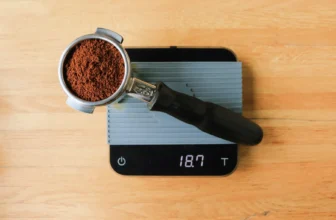
- Weigh the Coffee Beans: Use a small digital scale to weigh out exactly 18 grams of fresh, whole coffee beans.
- Grind Fine: Grind your beans directly into your portafilter basket. The ground coffee should have a uniform texture, similar to fine table salt or powdered sugar.
- Distribute Evenly: Use your finger or a distribution tool to level the coffee bed. Ensure there are no high mounds or deep valleys in the basket before tamping.
- Tamp Level and Firmly: Place the portafilter flat on a counter or tamping mat. Press your tamper straight down into the basket with firm, level pressure. You do not need to press excessively hard; simply press until the coffee bed is fully compressed and the tamper stops moving.
- Tare Your Scale: Place your coffee cup on your digital scale, put both under the group head, and lock the portafilter into place. Tare the scale to zero.
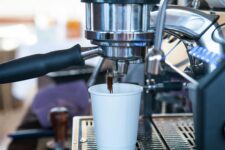
- Start the Extraction: Simultaneously start your timer and the brewing switch on your machine.
- Aim for the 1:2 Ratio: Watch the weight of the liquid espresso on your scale. Stop the extraction as soon as you hit 36 grams of liquid output (this achieves the ideal 1:2 extraction ratio).
- Check Your Time: Stop your timer. If your shot took between 25 and 30 seconds to reach 36 grams, your grind size is perfect. If it took under 20 seconds, grind finer next time; if it took over 35 seconds, grind coarser.
Expert Tips for Budget Espresso Setup Optimization
Operating an entry-level espresso machine requires a few clever, hands-on adjustments to overcome the physical limitations of smaller boilers and compact heating elements. These pro-barista techniques will instantly elevate your extraction quality without requiring expensive gear upgrades.
- Master Temperature Surfing: On single-boiler machines without a built-in PID (like the Gaggia Classic Pro), the heating element cycles on and off, causing the water temperature to swing up and down. To ensure your water is at the optimal brewing temperature, turn on the steam switch for 5 to 10 seconds to rapidly heat the boiler. Turn it off, run a short 2-second purge of water from the group head to release any steam pockets, and then immediately lock in your portafilter and pull your shot.
- Purge Before and After Steaming: Always run a 1-second burst of steam through your wand before submerging it in milk to clear out any condensed water. Similarly, purge the steam wand immediately after frothing to prevent milk from being sucked back into the boiler.
- Upgrade to a Precision Filter Basket: The stock filter baskets that come with budget machines are often cheaply made with unevenly stamped holes. Spending $25 to upgrade to a precision basket (such as an IMS or VST basket) ensures perfectly even water flow across the coffee bed, dramatically reducing channeling.
Common Mistakes to Avoid
Many beginners blame their espresso machine for poor-tasting coffee when the culprit is simply a minor, easily correctable mistake in their daily routine. Avoiding these common pitfalls will save you time, frustration, and money.
- Using Stale Coffee Beans: Coffee is a fresh agricultural product. If your coffee bag only lists a “Best By” date, the beans are likely months old and have lost the organic oils needed to produce crema. Always buy coffee beans that feature a clear “Roasted On” date, and brew them within 7 to 30 days of that date.
- Neglecting the Steam Wand: Milk proteins dry and harden on hot metal surfaces within minutes, clogging steam holes and breeding bacteria. Always wipe down your steam wand with a clean, wet cloth immediately after steaming, and purge steam to keep the tip clean.
- Tamping at an Angle: If you press your tamper down at an angle, one side of the coffee bed will be thinner than the other. Water naturally takes the path of least resistance, channeling entirely through the thinner side of the puck, leaving your shot tasting sour and bitter. Always keep your tamper perfectly level with the basket rim.
Maintenance Guide: Protecting Your Investment
Proper, routine cleaning and descaling are critical to protecting your espresso machine from mineral scale and rancid coffee oils. A consistent maintenance schedule prevents performance degradation, ensures clean flavor profiles, and extends the lifespan of your machine.
- Weekly Backflushing: If your machine has a 3-way solenoid valve (like the Gaggia Classic Pro or Breville Bambino Plus), use a blind basket and a dedicated espresso cleaning powder (like Cafiza) to backflush the group head weekly. This breaks down rancid coffee oils that accumulate behind the shower screen.
- Bi-Monthly Descaling: Mineral scale from tap water is the number one cause of espresso machine failure. Depending on your water hardness, run a dedicated descaling solution through your water tank every 2 to 3 months to keep heating elements clear.
- Annual Gasket Replacement: The rubber group head gasket that seals your portafilter will dry out and crack over time. Replace this gasket annually to prevent water from leaking around the sides of the portafilter during extractio.
What is the best budget friendly espresso machine for beginners?”
The best budget friendly espresso machine under $500 is the Breville Bambino Plus due to its 3-second startup and automatic milk frothing. For tight budgets under $250, the De’Longhi Dedica Arte offers the best compact value.
How much should I spend on a good espresso machine?
For a reliable home setup, plan to spend between $300 and $500 for a high-quality entry-level semi-automatic machine. High-end prosumer machines with dual boilers can cost $1,000 to $2,000+, but budget-friendly machines under $500 (like the Breville Bambino or De’Longhi Dedica) deliver genuine café-quality espresso when paired with a good burr grinder.
How can you tell if an espresso machine is good?
A good espresso machine consistently extracts rich, balanced shots with a golden crema without burning the coffee. Key technical indicators include stable thermal heating elements, non-pressurized portafilter options, a powerful steam wand for milk texturing, and solid internal valves (like an Over-Pressure Valve) to regulate pressure at 9 bars.
Which espresso machine is best for beginners?
The Breville Bambino (or Bambino Plus) is widely considered the best espresso machine for beginners due to its rapid 3-second heat-up time, compact size, user-friendly controls, and reliable 9-bar shot extraction. For those who prefer an all-in-one setup with a built-in grinder, the Breville Barista Express Impress is another top recommendation.
What is the best budget espresso coffee machine?
The best budget espresso coffee machine for beginners is the Breville Bambino Plus. If you prefer a fully manual option built like a commercial unit, the Gaggia Classic Pro is the top entry-level pick.
Conclusion & Final Verdict
The best budget espresso machine under $500 is not a one-size-fits-all product; the right machine depends entirely on your lifestyle, patience, and how you want to interact with the brewing process. By choosing a machine that matches your technical interest and space constraints, you can enjoy exceptional home espresso for years to come.
- The Best Option for Beginners: The Breville Bambino Plus is the undisputed king of convenience. Its 3-second startup, built-in PID stability, and automatic microfoam milk texturing deliver exceptional results with zero frustration.
- The Best Value Option: The De’Longhi Dedica Arte offers authentic espresso extraction and a highly capable commercial-style steam wand in an ultra-slim, 6-inch profile for under $250.
- The Premium Option for Enthusiasts: The Gaggia Classic Pro is a legendary, professional-grade gateway machine. Its heavy metal construction, commercial 58mm portafilter, and endless aftermarket customization make it a lifelong investment for those who love the craft of coffee.