 Ali Asghar
 Quick Answer
The best espresso machine brands differ significantly in performance: Breville excels in fast heat-up times and automated milk texturing; Gaggia offers entry-level commercial 58mm component builds under $600; De’Longhi dominates compact, beginner-friendly thermoblock and super-automatic systems; Lelit leads in prosumer PID temperature stability and manual flow profiling; Rancilio delivers commercial steam power; Rocket Espresso provides iconic E61 group head thermal inertia; and La Marzocco provides handcrafted commercial durability that lasts 15 to 20+ years.
If you’re comparing all the top models, read our complete Best Espresso Machines for Home guide.
Head-to-Head Performance Comparison Table
| Brand | Temp Control | Steam Power | Key Advantage | Amazon Price |
| Breville | Very High (PID) | Fast & Automated | 3-sec heat-up & auto-milk texturing | Check Price |
| Gaggia | Moderate (Manual Surfing) | Solid | Commercial 58mm portafilter under $600 | Check Price |
| De’Longhi | Standard | Moderate | Beginner-friendly pressurized baskets | Check Price |
| Rancilio | Moderate (Manual Surfing) | Very High | Commercial steam power & heavy brass build | Check Price |
| Rocket | High (E61 Thermal Mass) | Commercial Grade | Iconic E61 design & heavy-duty thermal mass | Check Price |
| La Marzocco | Flawless | Commercial Grade | Heirloom commercial durability (15–20+ yrs) | Check Price |
Introduction
Choosing the right home espresso machine can feel overwhelming with dozens of heritage Italian manufacturers and modern appliance brands competing for counter space. The market spans from $150 entry-level thermoblock units to $6,000+ commercial dual-boiler masterpieces handcrafted in Florence.
Understanding performance differences between espresso machine brands requires evaluating key brewing mechanics: thermal stability, steam power, portafilter dimensions, pump consistency, and internal architecture.
This comprehensive guide breaks down how top espresso machine brands perform in real-world kitchen environments, helping you choose the exact brand and model aligned with your budget, skill level, and taste preferences.
Top Italian Espresso Machine Brands
When it comes to coffee heritage, espresso machine Italy brands set the global benchmark for extraction stability and craftmanship. Renowned Italian manufacturers like Gaggia, De’Longhi, Rancilio, Rocket, and La Marzocco dominate the market offering everything from entry-level home units to heavy-duty, commercial-grade dual boiler systems.
How Do Popular Espresso Machine Brands Compare in Terms of Performance?
When evaluating performance across major espresso machine manufacturers, performance relies on five core engineering pillars:
- Thermal Stability & Heating Architecture: Fast-heating thermoblocks (Breville, De’Longhi) offer rapid 3-to-20-second warm-up times, while traditional brass/copper boilers and E61 group heads (Gaggia, Rancilio, Rocket, Lelit) require 10 to 30 minutes to warm up, delivering superior temperature stability during extraction.
- Pressure Control & Flow Profiling: Standard entry-level machines utilize 15-bar pumps with pressurized baskets, while prosumer and commercial brands (Lelit, La Marzocco, Rocket) use overpressure valves (OPVs) set to a strict 9 bars or rotary pumps with manual paddle profiling.
- Portafilter Sizing: Consumer brands often utilize smaller 54mm portafilters (Breville entry-level) or pressurized 51mm baskets (De’Longhi), whereas prosumer brands stick to the commercial standard 58mm portafilter, allowing access to precision baskets and distribution tools.
- Steam Power & Milk Texturing: Single-boiler setups require waiting between pulling a shot and steaming milk, while Heat-Exchanger (HX) and Dual-Boiler machines steam milk effortlessly in under 15 seconds while simultaneously extracting espresso.
- Build Quality & Longevity: Consumer appliance brands incorporate lighter plastic frames and proprietary internal fittings, whereas specialized Italian brands use heavy-gauge stainless steel, brass boilers, and standard commercial fittings built for decade-plus lifespans.
Which Coffee Machine Brands Have the Strongest Customer Loyalty?
Customer loyalty in the coffee industry comes down to three main factors: build quality, long-term reliability, and customer support. Based on market feedback and user retention, a few brands stand out:
La Marzocco & Rancilio: In the prosumer and commercial space, these brands boast incredible customer loyalty because of their all-metal construction, readily available replacement parts, and decades-long operational life.
Breville / Sage: Leads in customer satisfaction for entry-level and mid-range home espresso users due to intuitive design, rapid heat-up times, and accessible customer service.
Technivorm Moccamaster: Holds one of the highest customer retention rates in drip coffee making. Their hand-built units with 5-to-10-year warranties create lifelong brand loyalists.
Deep Dive: Top 7 Espresso Machine Brands Compared
Boiler Systems: Single Boiler vs. Heat Exchanger vs. Dual Boiler
When investing in a top-tier espresso brand, understanding internal thermal architecture is critical. Entry-level home machines typically use single boilers or thermoblocks, requiring you to wait between brewing and steaming. Mid-to-high-tier brands utilize Heat Exchanger (HX) or dedicated Dual Boiler systems, allowing simultaneous espresso extraction and milk micro-foaming for high-volume efficiency.
1. Breville — Best for Rapid Heating & User-Friendly Innovation
Breville (marketed as Sage in Europe) has revolutionized home espresso by bringing smart automation and fast thermoblock heating systems into accessible home appliances. Rather than relying on traditional heavy brass boilers, Breville focuses on internal PID digital temperature control, dynamic low-pressure pre-infusion, and intuitive touchscreen interfaces.
Breville performance stands out in heat-up times and automated milk texturing. Their proprietary ThermoJet heating technology allows machines to reach optimal extraction temperatures in just 3 seconds. Additionally, their automated steam wands texture oat, almond, and dairy milk to microfoam perfection without requiring manual barista intervention.
- Standout Model: Breville Bambino Plus (Best overall entry-level machine featuring 3-second ThermoJet heat-up, PID stability, dynamic pre-infusion, and auto-milk frothing) or Breville Barista Touch Impress (Best all-in-one grinder combo).
- Key Differentiator: Proprietary ThermoJet heating systems, smart user interfaces, integrated auto-tamping features, and high user-friendliness out of the box.
- Pros:
- Ultra-fast warm-up times (3 seconds on ThermoJet models).
- Precise internal PID temperature control prevents sour or burnt shots.
- Exceptional auto-milk texturing technology ideal for beginners.
- Cons:
- Uses proprietary 54mm portafilters on entry and mid-tier models (limiting compatibility with commercial 58mm accessories).
- Higher proportion of internal plastic components compared to traditional Italian manufacturers.
Fitting a multi-boiler machine or a compact setup into a tight kitchen counter can be challenging. Read our expert tips on building an efficient Small Space coffee station setup to organize your machine and tools neatly.
2. Gaggia — Best Budget-Friendly & Heritage Italian Brand
No discussion about home espresso is complete without acknowledging Gaggia. Founded in Milan, Italy, in 1938 by Achille Gaggia, the brand literally invented modern espresso by replacing high-pressure steam extraction with a revolutionary spring-lever mechanism that produced the world’s first genuine crema. For over eight decades, Gaggia has made authentic Italian coffee accessible, bringing commercial-style brewing mechanics directly into home kitchens at an accessible price point.
Gaggia machines are renowned for prioritizing core extraction fundamentals over unnecessary gadgets. By utilizing heavy-duty brass group heads, commercial 58mm chrome-plated portafilters, and durable stainless steel housing, Gaggia ensures maximum thermal mass for pulling rich, balanced shots. Their simple, mechanical design eschews overly complex electronics, making these machines exceptionally reliable, easy to maintain, and ideal for home baristas who love to tweak or upgrade their setups over time.
- Standout Model: Gaggia Classic Pro (The ultimate entry-level prosumer icon featuring a commercial 58mm portafilter, independent rocker switches, a 3-way solenoid valve for dry coffee pucks, and a commercial-style two-hole steam wand).
- Key Differentiator: True commercial-sized 58mm components under $600, offering an open ecosystem for aftermarket modifications (PID controllers, brass group tops, precision baskets) and an active global enthusiast community.
- Pros:
- Uses standard commercial 58mm portafilters, allowing full access to pro-level precision accessories (IMS baskets, distribution tools, bottomless portafilters).
- Exceptional, heavy-duty build quality with simple, user-serviceable mechanical parts built to last for decades.
- Extremely affordable entry point into true specialty-grade espresso extraction and DIY modding.
- Cons:
- Stock single-boiler models require “temperature surfing” technique or aftermarket PID installation for maximum shot-to-shot consistency.
- Single-boiler architecture means a short wait time between pulling an espresso shot and steaming milk.
3. De’Longhi — Best for Compact Convenience & Super-Automatic Speed
De’Longhi is a powerhouse in the home coffee appliance market, dominating both ultra-compact manual espresso machines and bean-to-cup super-automatic systems. Their engineering centers on fast kitchen workflow, compact footprints, and forgiving extraction methods that allow non-baristas to make espresso-based drinks quickly.
In manual performance, De’Longhi machines utilize pressurized filter baskets (double-walled), which artificially build crema even if your grind size isn’t dialed in perfectly or if you are using pre-ground store-bought coffee. On their high-end super-automatic lines (like the Eletta Explore or Rivelia), De’Longhi offers touch-button cold brew, automatic milk carafes, and multiple user profile configurations.
- Standout Model: De’Longhi Dedica Deluxe (Best ultra-compact entry choice) or De’Longhi Eletta Explore (Best super-automatic for hot and cold milk beverages).
- Key Differentiator: Pressurized brewing systems for maximum forgiveness alongside top-tier one-touch super-automatic bean-to-cup technology.
- Pros:
- Very affordable price points and ultra-small kitchen footprints.
- Extremely forgiving for beginners using pre-ground coffee.
- Super-automatic range offers wide drink versatility at the press of a button.
- Cons:
- Pressurized baskets limit true specialty coffee extraction depth and clarity.
- Lighter construction with non-commercial 51mm group heads on manual models.
4. Lelit — Best Prosumer & Specialty Coffee Innovator
Founded in Castegnato, Italy, Lelit has carved out a distinct reputation in the specialty coffee world by bridging the gap between entry-level home machines and multi-thousand-dollar commercial setups. Unlike brands that rely heavily on consumer convenience or automated gimmicks, Lelit focuses strictly on precision extraction, advanced thermal control, and prosumer customization, making them a top choice for dedicated coffee enthusiasts.
Lelit machines are engineered with high-grade Italian components, featuring heavy brushed stainless steel bodies, copper boilers, and full commercial 58mm group heads. What sets Lelit apart is their early adoption of built-in PID digital temperature controllers, shot timers, and innovative manual flow control technology across compact footprints. This allows home baristas to fine-tune extraction parameters, experiment with light roasts, and maintain shot-to-shot consistency without requiring massive kitchen space.
- Standout Model: Lelit Mara X (A compact heat-exchanger machine featuring an innovative quiet pump system, dual pressure gauges, and a temperature control algorithm that eliminates traditional HX overheating issues) or Lelit Bianca V3 (Dual boiler with full manual wooden flow-profiling paddle).
- Key Differentiator: Factory-integrated prosumer features—like digital PID temperature control, shot timers, and manual flow profiling paddles—packed into compact, space-saving Italian designs.
- Pros:
- Exceptional temperature stability and precise digital controls straight out of the box, eliminating the need for aftermarket modifications.
- Standard commercial 58mm group heads and high-end brass/copper boiler construction for maximum thermal mass.
- Outstanding value-to-performance ratio for home baristas wanting dual-boiler or advanced heat-exchanger performance.
- Cons:
- Higher learning curve compared to simple push-button or automatic machines, requiring proper dial-in technique.
- Brushed stainless steel body and sharp industrial edges require regular wiping and care to maintain aesthetic appeal.
5. Rancilio — Best Commercial-Grade Single-Boiler Durability
Rancilio is an Italian manufacturer with deep roots in commercial espresso machine production. Their flagship home model, the Rancilio Silvia, has been a benchmark in the home barista community for over two decades. Rancilio’s performance philosophy is simple: build residential machines using actual commercial components without aesthetic frills.
The Rancilio Silvia features a massive 0.3-liter brass boiler, a commercial 58mm chrome-plated brass portafilter, and an industrial-grade iron frame wrapped in brushed stainless steel. Its steam performance is legendary for a single-boiler machine, producing wet steam capable of texturing milk in seconds.
- Standout Model: Rancilio Silvia M or Rancilio Silvia PRO X (Dual boiler version with dual PIDs and soft pre-infusion).
- Key Differentiator: Commercial steam power and heavy iron frame/brass boiler construction designed around professional cafe standards.
- Pros:
- Strong steam power in the single-boiler category.
- Industrial build quality with commercial brass group head and internal components.
- Exceptionally long operational life with easily sourceable replacement parts.
- Cons:
- Long warm-up time (15–20 minutes required for the heavy brass boiler to saturate).
- Base Silvia model lacks a built-in PID display, requiring manual temperature surfing.
6. Rocket Espresso — Best Prosumer Design & Icon of Italian Craftsmanship
Handcrafted in Milan, Italy, Rocket Espresso is synonymous with premium aesthetic engineering and prosumer espresso excellence. Born from a partnership between New Zealander Andrew Meo and Italian Daniele Berenbruch, Rocket was created to bring authentic commercial espresso mechanics into stylish residential spaces. Their machines are widely recognized for their signature side-panel circular cutouts, mirror-polished stainless steel bodies, and attention to tactile details.
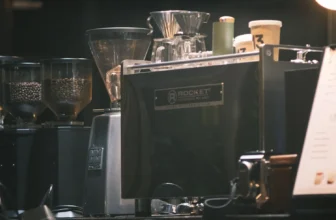
Beneath their exterior, Rocket Espresso machines are built with traditional commercial-grade E61 group heads, thick nickel-plated brass heat-exchanger boilers, and heavy commercial portafilters. The thermal mass of the E61 group head naturally circulates hot water continuously, ensuring temperature stability prior to extraction. Designed for specialty coffee purists, Rocket machines deliver commercial steam power alongside a hands-on tactile brewing experience.
- Standout Model: Rocket Appartamento (A compact prosumer heat-exchanger machine featuring the iconic E61 group head, commercial steam and hot water valves, customizable side inserts, and serious microfoam steaming power) or Rocket Giotto Cronometro.
- Key Differentiator: Iconic Italian aesthetic with circular side-panel designs paired with a heavy-duty commercial E61 group head for thermal inertia and classic lever-actuated brewing.
- Pros:
- Mirror-finished stainless steel build quality and timeless E61 group head aesthetics.
- Commercial-grade steam power that textures large volumes of milk in seconds.
- Standard commercial 58mm portafilters and heavy brass boiler components engineered for long-term durability.
- Cons:
- Heat-exchanger single boiler system requires a brief “cooling flush” to manage group head temperature before pulling shots on non-PID models.
- Base Appartamento lacks a built-in digital PID display or shot timer out of the box, requiring manual technique and timing.
7. La Marzocco — Best Prosumer & Heritage Brand
No conversation regarding specialty coffee can exist without acknowledging La Marzocco. Founded in Florence, Italy, in 1927 by the Bambi brothers, La Marzocco is responsible for inventing the horizontal dual-boiler architecture that serves as the blueprint for modern commercial espresso machines. For decades, they have been a widespread choice for high-volume specialty cafés, and their residential line brings that exact commercial build quality straight to your kitchen.
La Marzocco machines are built by hand using heavy-gauge surgical stainless steel boilers, saturated group heads, and commercial rotary pumps. These machines eschew cheap plastic parts entirely, resulting in heavy, industrial appliances built to maintain temperature consistency regardless of how many consecutive shots you pull.
- Standout Model: La Marzocco Linea Mini R (A redesigned residential masterpiece featuring an internal rotary pump, dual-boiler architecture, built-in shot timers, seamless Bluetooth app connectivity for temperature configuration, and manual pressure profiling via a paddle mechanism) or La Marzocco Linea Micra (Ultra-compact residential footprint).
- Key Differentiator: Genuine, hand-built commercial components, legendary thermal stability, and an operational lifespan that easily exceeds 15 to 20 years with proper maintenance.
- Pros:
- Hand-built commercial architecture using surgical-grade stainless steel.
- Heirloom-level build longevity that easily lasts over 15 to 20 years with routine maintenance.
- Dual-boiler thermal stability and manual pressure/flow profiling capability.
- Cons:
- High financial barrier to entry, with residential setups starting around $3,900+.
- Large, heavy footprint requires significant kitchen counter real estate.
Espresso Machine Buyer Profiles: Choosing by Budget & Skill Level
| Budget Tier | Skill Level | Primary Focus Area | Recommended Brands |
| Entry Explorer ($150 – $500) | Beginner | Fast workflow & easy operation | Breville, De’Longhi |
| Intermediate Barista ($500 – $1,500) | Beginner-Intermediate | Dialing in shots & custom modding | Gaggia, Breville (Pro), Rancilio |
| Luxury Connoisseur ($1,500 – $3,500) | Intermediate | PID consistency & E61 styling | Lelit, Rocket Espresso |
| Lifetime Prosumer ($3,500 – $6,000+) | Advanced / Purist | Heirloom build & commercial power | La Marzocco, Slayer |
1. The Entry-Level Explorer (Budget: $150 – $500)
- Ideal For: Beginners transitioning from instant coffee or pod machines to genuine home espresso.
- Overview: This tier is built for users who value fast heating times, forgiving extraction, and compact counter space. Machines in this range utilize thermoblock heating or compact single boilers paired with pressurized filter baskets to ensure a thick layer of crema even with pre-ground coffee.If you are working with a strict budget and want the highest value under $500, explore our detailed breakdown of the best budget espresso machines for entry-level home baristas.
- Top Recommended Models: De’Longhi Dedica Deluxe, Breville Bambino.
2. The Dedicated Intermediate Barista (Budget: $500 – $1,500)
- Ideal For: Home baristas ready to take control of their grind size, extraction pressure, and manual milk texturing.
- Overview: Moving into this range unlocks prosumer features such as built-in digital PID temperature controllers, commercial-style 58mm portafilters, and integrated conical burr grinders. These setups provide the thermal mass and brewing pressure stability needed to dial in specialty light and medium roasts.
- Top Recommended Models: Gaggia Classic Pro, Breville Barista Touch Impress, Rancilio Silvia.
3. The Luxury Connoisseur & Office Space (Budget: $1,500 – $4,000+)
- Ideal For: High-volume households, design-conscious buyers, or modern office spaces wanting high-end performance with minimal friction.
- Overview: This category balances luxury aesthetics with high-performance dual boilers or advanced super-automatic systems. Equipped with independent brew and steam boilers, these machines allow you to extract espresso shots while simultaneously steaming silk-smooth microfoam with zero waiting time.
- Top Recommended Models: Rocket Appartamento, Lelit Mara X, Lelit Bianca V3.
4. The Lifetime Prosumer Enthusiast (Budget: $3,500 – $6,000+)
- Ideal For: Specialty coffee purists who demand zero compromise, heirloom build quality, and hand-built commercial components.
- Overview: Positioned at the pinnacle of home espresso, this tier features handcrafted commercial architecture built directly for residential kitchens. Utilizing surgical stainless steel boilers, saturated group heads, and commercial rotary pumps, these machines bring the exact engineering of top specialty cafes into your home.
- Top Recommended Models: La Marzocco Linea Mini R, La Marzocco Linea Micra.
Core Architectural Differences: Thermoblock vs. Single Boiler vs. Heat-Exchanger vs. Dual Boiler
To evaluate brand performance accurately, it helps to understand the four primary heating architectures used in home espresso machines:
| Architecture Type | Heat-Up Time | Brew/Steam Workflow | Thermal Stability Level |
| Thermoblock / ThermoJet | 3 – 30 seconds | Alternate (Wait time required) | Medium (PID dependent) |
| Single Boiler | 10 – 15 minutes | Alternate (Wait time required) | High (Heavy brass thermal mass) |
| Heat-Exchanger (HX) | 15 – 20 minutes | Simultaneous brewing & steaming | High (Requires cooling flush) |
| Dual Boiler | 15 – 25 minutes | Simultaneous brewing & steaming | Maximum (Independent PID boilers) |
Thermoblock / ThermoJet
- How It Works: Water passes through a heated metal block with an internal coiled tube, heating instantly on demand.
- Pros: Extremely fast warm-up (3 to 30 seconds); highly energy efficient.
- Cons: Less thermal mass compared to brass boilers; temperature can drop slightly on long shots.
- Brands Using It: Breville, De’Longhi.
Single Boiler
- How It Works: One internal boiler heats water for brewing, then raises temperature to produce steam.
- Pros: Affordable, excellent thermal stability during extraction, simple repair mechanics.
- Cons: Cannot pull shots and steam milk simultaneously; requires 30–60 seconds to switch modes.
- Brands Using It: Gaggia, Rancilio, entry-level Lelit.
Heat-Exchanger (HX)
- How It Works: A large steam boiler stays at steaming temperatures while a small copper tube (heat exchanger) runs through it to heat brew water on demand.
- Pros: Simultaneous brewing and steaming at a lower price point than dual boilers.
- Cons: Requires a brief “cooling flush” shot before brewing to clear overheated water resting in the group head.
- Brands Using It: Rocket Espresso, Lelit (Mara X).
Dual Boiler
- How It Works: Contains two completely independent boilers—one dedicated to PID brew water, and one dedicated to steam pressure.
- Pros: Zero temperature compromise, maximum steam power, simultaneous brewing and steaming.
- Cons: Higher cost, larger footprint, higher energy draw.
- Brands Using It: La Marzocco, Lelit (Bianca), Rancilio (Silvia Pro X), Breville (Dual Boiler).
Step-by-Step Guide: How to Dial in Espresso on Any Brand
Regardless of whether you buy a Breville, Gaggia, or La Marzocco, dialing in your espresso shot requires following a repeatable process:
| Step Number | Phase | Action & Target Parameter |
| Step 1 | Dose | Measure exactly 18g of fresh whole-bean coffee into your grinder |
| Step 2 | Prep & Tamp | Use a WDT needle tool to remove clumps, then tamp evenly with 30 lbs pressure |
| Step 3 | Extract | Target 36g of liquid espresso output in 25 to 30 seconds extraction time |
| Step 4 | Adjust Grind | Fast flow (<20s) = Adjust finer | Slow flow (>35s) = Adjust coarser |
- Step 1: Weigh Your Coffee Input (Dose): Use a digital scale to weigh out 18 grams of freshly roasted whole-bean coffee into your grinder.
- Step 2: Prepare the Coffee Puck: Grind directly into your portafilter. Use a Weiss Distribution Technique (WDT) needle tool to eliminate clumps, then tamp down evenly until the puck is compressed (approx. 30 lbs of pressure).
- Step 3: Lock in & Time the Shot: Insert the portafilter into your group head, place your scale under the spout, tare it to zero, and start extraction alongside a timer.
- Step 4: Target the Golden Ratio: Aim to extract 36 grams of liquid espresso from your 18-gram dose (1:2 ratio) in 25 to 30 seconds.
- Step 5: Adjust Based on Taste:
- If the shot flows too fast (<20 seconds) and tastes sour: Adjust your coffee grinder finer.
- If the shot flows too slow (>35 seconds) and tastes bitter/harsh: Adjust your coffee grinder coarser.
Expert Tips for Maximizing Brand Performance
- Prioritize Your Grinder First: An expensive prosumer machine from Rocket or Lelit will produce poor espresso if paired with a low-quality, inconsistent grinder. Invest at least 30–40% of your total budget into a dedicated espresso-focused burr grinder (such as a Eureka Mignon, DF64, or Baratza Sette).Pairing a high-end espresso machine with an inconsistent grinder will instantly ruin your shot extraction. To unlock the true potential of your coffee beans, check out our comprehensive guide on the best espresso coffee grinders under 200$ to find the perfect grind consistency for your setup.
- Use Scaled/Filtered Water: Scale buildup from hard tap water is the #1 cause of heating element failure across all espresso machine brands. Use filtered water with low mineral content (or add Third Wave Water minerals to distilled water) to protect internal boilers.
- Warm Up Portafilters: Always lock your portafilter into the group head while the machine is heating up. Extracting espresso through a cold metal portafilter instantly robs heat from your water, creating sour extraction.
- Backflush Regularly: Use a blind filter basket and espresso machine cleaning powder (like Urnex Cafiza) every 2–4 weeks on machines equipped with a 3-way solenoid valve (Gaggia, Rancilio, Lelit, Breville) to clean out old coffee oils.
Common Mistakes When Buying & Using Espresso Machines
Mistake 4: Ignoring Maintenance & Group Head Gaskets: Group head rubber gaskets degrade over time due to heat and pressure. Replace silicone/rubber group gaskets once a year to prevent leakage around the portafilter handle during extraction.
Mistake 1: Expecting Crema from Stale Coffee: Crema is created by pressurized carbon dioxide gas degassing from fresh coffee beans. Store-bought coffee beans roasted months ago will yield watery shots regardless of how expensive your espresso machine is. Use beans roasted within 7 to 21 days.
Mistake 2: Buying a Machine Without Space for a Grinder: Buying a manual espresso machine without factoring in a dedicated espresso grinder leads to relying on pre-ground coffee, which limits shot quality.
Mistake 3: Overfilling the Water Reservoir: Leaving standing water in your reservoir for weeks leads to algae buildup and stale tasting espresso. Fill your reservoir with fresh filtered water daily.
Conclusion
Choosing between the top espresso machine brands ultimately comes down to balancing your desired workflow, budget, and interest in coffee as a craft:
- Choose Breville or De’Longhi if you value quick morning workflows, fast heating times, auto-frothing convenience, and minimal prep work.
- Choose Gaggia or Rancilio if you want heavy commercial-grade single-boiler builds under $1,000 with maximum durability and DIY modding potential.
- Choose Lelit or Rocket Espresso if you are an intermediate enthusiast who wants prosumer PID precision, stunning Italian mirror-finished aesthetics, and manual pressure profiling.
- Choose La Marzocco if you want hand-built, heirloom commercial dual-boiler architecture that delivers absolute temperature stability and lasts for decades.
Invest in a quality espresso grinder alongside fresh coffee beans to unlock the full potential of your home coffee bar.
Frequently Asked Questions (FAQ)
Why Choose an Italian Espresso Machine Brand?
What brand is the best espresso machine?
For Prosumer/Heritage Performance: La Marzocco and ECM. They feature hand-built commercial DNA, exceptional thermal stability, and long-term repairability.
For Precision & Tech Integration: Breville (Sage). They lead the market in user-centered ergonomics, digital microprocessors (PID), and ultra-fast heating architectures.
What are the best espresso brands?
Heritage Luxury (Prosumer): La Marzocco, ECM, and Profitec.
All-In-One Consumer Tech: Breville / Sage.
Premium Fully Automatic: Jura.
Value & Entry-Level Manual/Semi-Automatic: De’Longhi and Gaggia.
What are the top coffee machines?
Breville Barista Express Impress (Best overall semi-automatic with smart dosing/tamping assist).
Jura Z10 (The pinnacle of luxury super-automatics with adaptive grinding and true cold extraction options).
Breville Bambino Plus (Best compact, budget-friendly machine for smaller spaces).
De’Longhi Rivelia (The top user-friendly fully automatic machine featuring interchangeable bean hoppers).
Rancilio Silvia Pro X (The best mid-tier dual-boiler machine for enthusiast-level performance).